AGV Intelligent Warning Systems: Critical Safeguards for Safe Operations

AGV Intelligent Warning Systems: Critical Safeguards for Safe Operations

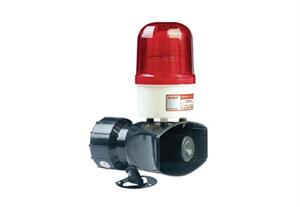
Behind the seamless flow of automated logistics, AGVs (Automated Guided Vehicles) function as tireless steel lifeblood, navigating factories and warehouses. Ensuring their safe, reliable operation—especially in complex human-robot environments—demands intelligent warning systems that serve as both safety essentials and communication bridges. Among these, three-color warning lights and audible-visual alarms (including buzzers and motion music modules) play pivotal roles.


Core Warning Devices Explained

1.Three-Color Warning Lights: Visual Status Language

Function: Instantly communicates AGV status/intent via universal color signals:

Red: Emergency stop, critical failure (highest priority).

Yellow: Deceleration, path adjustment, standby (caution advised).

Green: Normal operation, safe passage (all-clear signal).


Advantages: Intuitive messaging, high visibility (even in complex lighting), globally recognized safety coding.


2.Audible-Visual Alarms: Dual-Sense Alerting

Function: Combines bright flashing lights with high-decibel sounds for urgent alerts in noisy/low-visibility areas.

Key Components:

Buzzers: Sharp, standardized tones (e.g., “beep-beep-beep”) for immediate warnings:

Emergency stops

Obstacle proximity

Critical failures


Motion Music Modules: Programmable melodic tones for non-critical alerts:

Background travel notices (“Caution, vehicle approaching”)

Task completion alerts

Low-priority reminders


Advantages: Unmissable alerts (sound + light synergy), broad coverage, human-friendly audio profiles.


Scientific Selection: Matching Solutions to Your AGV

Choosing warning devices requires balancing safety, efficiency, and environmental experience. Key selection dimensions:

1.Scenario & Regulatory Compliance (Priority)

Noise Levels:

Loud workshops: ≥120dB alarms

Quiet labs: Motion music modules


Human-Robot Density:

Mixed zones: Three-color lights + buzzers (mandatory)

Isolated routes: Simplified setups


Safety Standards:

Mandatory compliance with EN ISO 13849, ANSI/ITSDF B56.5 (governing colors, sound patterns, brightness, volume).


2.Core Performance Alignment

Voltage & Power: Match AGV power systems (e.g., 24V/48V DC) and minimize drain on battery life.


IP Rating:

Indoor/dry: IP54

Dusty/humid: IP65+

Outdoor/harsh: IP67/IP69K


Visibility/Audibility:

Lights: High brightness (lumens/candela), wide viewing angles.

Alarms: Clear dB @ distance, distinct tones (buzzers) or melodies (music modules).


Mounting: Fit AGV chassis space (top/sides) and interface (screw holes/clips).


Beyond Accessories: Safety System Nerve Endpoints

Three-color lights and audible-visual alarms are not mere “add-ons”—they form the nervous system of AGV safety, enabling efficient human-robot collaboration. Understanding your operational challenges is key to effective investment.


Seeking Precision-Matched Warning Solutions?
We deliver full-range AGV safety devices:

Comprehensive Portfolio: Three-color lights, high-performance buzzers, customizable motion music modules.

Compliance: International safety standards adherence.

Integration & Support: Flexible solutions + expert guidance.


Equip Your AGVs with Intelligent Awareness!
Contact us for safety-certified, scenario-optimized warning systems.


AGV’s Safety Lifeline: Comprehensive Guide to E-Stop Button Selection & Application

AGV’s Safety Lifeline: Comprehensive Guide to E-Stop Button Selection & Application

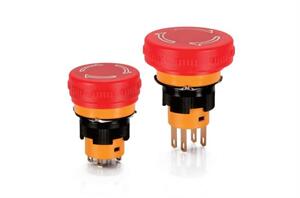
E-stop buttons serve as AGVs’ “critical kill switches,” providing millisecond hardware power cutoff during emergencies. Compliant with ISO 13850, they deliver fail-safe protection when personnel or equipment is at risk. This guide explores e-stop technology and selection logic for uncompromising AGV safety.


Core Value: Zero-Delay Hardware Protection

Absolute Reliability

Direct mechanical cutoff: Severs motor circuits in ≤20ms (5x faster than PLC signals).

Safety certifications: EN ISO 13849 PL e / SIL 3 compliant.


Human-Machine Safety Assurance

Emergency avoidance: Instantly halts AGVs heading toward people/equipment.

Fault isolation: Prevents secondary damage (motor overloads, battery shorts).


Key Technical Features

1.Contact Structures

Type

Advantage

Best For

Dual-channel NC

Redundant; single-fault tolerant

Heavy AGVs/high-risk zones

Latching contacts

Mechanical lock after trigger

Manual reset scenarios

2.Ergonomic & Protective Design

Anti-accidental press: ≥40mm mushroom head; 5N+ activation force.

Reset mechanisms: Twist-release / pull-reset / key-release options.


3.Environmental Resilience

IP67/IP69K: Resists pressure washing and oil ingress.

Corrosion resistance: Stainless steel housing + silicone seals.


Precision Selection Guide

1.Safety Level Alignment

Risk Scenario

Requirement

Solution

Light warehouse AGVs

PL c

Single contact + twist-reset

Human-robot zones

PL e / SIL 3

Dual contacts + key-reset

Explosive atmospheres

ATEX certification

Flameproof housing

2.Mechanical Endurance

1 million cycles (gold-plated contacts).

IK10 impact rating (withstands 20J impacts).


3.Mounting & Visibility

Control panel: Flush-mounted (Φ40mm) to prevent snagging.

AGV sides: Pendant-mounted for multi-angle access.

Hazard zones: Models with LED indicators for low-light visibility.


4.Electrical Compatibility

Voltage range: 24VDC–480VAC.

Interfaces: Dry contacts or PROFIsafe/CANopen Safety.


Critical Avoidances:

Reject non-CE/UL certified buttons.

Avoid reset force <3N to prevent vibration-induced resets.


Scenario-Based Solutions

AGV Type

Solution

Key Value

Warehouse AMRs

Φ40mm latching + IP67

Prevents accidental presses

Chemical plant AGVs

Dual-channel + ATEX

Explosion-proof safety

Outdoor logistics AGVs

Wide-temperature (-40°C) with heating

Reliable operation in freezing


Incident-Free AGV Operations

E-stop selection forms the final barrier in AGV safety systems. From cost-effective single-contact buttons to explosion-proof dual-channel solutions, precise matching enables zero-incident operations.


Seeking Certified E-Stop Buttons for AGVs?
We provide:

Full-Scenario Options: IP69K/ATEX/wide-temperature models (SIL 3/PL e certified).

Customization:


Voltage/interface tailoring (24V–480V; dry contacts/PROFIsafe)

Mounting adapters (flush/pendant/magnetic)

Alert expansions (audible alarms + remote status)

Lifecycle Support: Safety validation → maintenance.


Fortify Your AGVs with Critical Protection!
Contact our team for tailored solutions.


Core Value:

Scenario-Driven Design – Buttons optimized for risk level, environment, reset logic.

Industrial Reliability – IK10 impact rating, 1M+ cycle endurance.

Seamless Integration – Direct hardware cutoff + safety bus compatibility.


AGV’s Ultimate Armor: Comprehensive Guide to Safety Bumper Selection & Application

AGV’s Ultimate Armor: Comprehensive Guide to Safety Bumper Selection & Application

Safety bumpers serve as AGVs’ “tactile sense,” providing zero-delay collision response as the final physical barrier. Upon contact with obstacles, bumpers trigger emergency stops within 10ms to prevent equipment damage and injuries. This guide explores bumper technology and scenario-based selection for fail-safe AGV safety systems.


Core Value: Millisecond-Response Physical Barrier


Unmatched Mechanical Reliability

Zero electronics: 100% effective in EMI/dust/oil where sensors fail.

Instant reaction: ≥5N pressure cuts motor power in 10ms (EN ISO 13849 PLd compliant), 3x faster than electronic sensors.


Full-Perimeter Protection

Flexible strips bend to AGV contours (50mm min. radius), covering front/sides/forks.

Zoned triggering: Front contact stops AGV; side contact alerts only.


Key Technology Breakdown

1.Triple-Layer Construction

Layer

Function

Technical Highlights

Outer sheath

Wear/cushioning

PU/PVC; >30MPa tear strength

Pressure dispersion

Impact distribution

Diamond-pattern honeycomb structure

Core switch

Emergency stop

Gold-plated contacts; >1M cycles

2.Smart Upgrades

CANopen/EtherCAT output: Sends collision location/force data for incident analysis.

Self-diagnostics: Alerts for cracks/aging to prevent failure.


Precision Selection Guide

1.Mechanical Performance

Parameter

Light AGVs

Heavy AGVs

Trigger force

5–15N

20–50N

Reset force

≤3N

≤8N

Impact resistance

IK08 (5J)

IK10 (20J)

2.Environmental Resilience

Chemical zones: EPDM rubber (acid/solvent resistance).

Freezers: Silicone (-60°C flexibility).

Food/pharma: FDA-certified white PU (non-contaminating).


3.Electrical Interface

Basic: Dry contact for direct motor cutoff.

Smart: PROFIsafe/CANopen Safety for real-time collision mapping.


4.Mounting Reliability

Embedded rails: Aluminum + anti-vibration locks.

Quick-swap: Tool-free replacement in <3 minutes.


Critical Avoidances:

Reject >85 Shore A hardness: Low-temperature sensitivity drops 40%.

Avoid non-reset designs: Speed bumps cause false stops.


Scenario-Based Solutions

AGV Type

Solution

Key Value

Warehouse AGVs

25mm narrow strip + 50N force

Prevents rack collisions

Heavy forklift AGVs

Dual-row redundant + bus output

Withstands inertia; logs impacts

Cleanroom AMRs

FDA white bumper + IP69K

GMP sterile environments


Building Absolute AGV Safety

Bumper selection underpins collision-free logistics. From cost-effective mechanical stops to smart tactile systems, scenario-aligned solutions achieve “zero impact” goals.


Seeking Reliable Safety Bumpers for AGVs?
We provide:

Full-Scenario Coverage: PU/PVC/silicone/EPDM (-60°C to 120°C).

Smart Interfaces: Dry contact/CANopen Safety/PROFIsafe.


Customization:

Curved contour cutting

Multi-zone triggering (stop/alert)

Vibration-optimized mounts

Lifecycle Support: Installation → aging monitoring.


Fortify Your AGVs with Ultimate Physical Protection!
Contact us for tailored solutions.

Core Value:
Scenario-Driven Design – Optimized for AGV contours, impact forces, environments.
Industrial Reliability – IK10 impact rating, 1M+ cycle lifespan.
Seamless Integration – Quick-connect electrical interfaces.


AGV’s Safety Barrier: Ultrasonic Collision Sensor Selection & Application Guide

AGV’s Safety Barrier: Ultrasonic Collision Sensor Selection & Application Guide

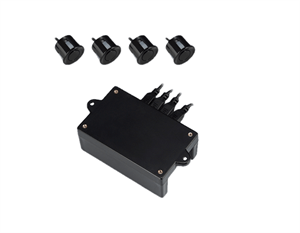
Ultrasonic collision sensors serve as AGVs’ “invisible shields,” triggering real-time slowdowns or emergency stops to ensure human-machine safety and operational stability. Their unique sound-wave reflection principle and environmental resilience make them essential for industrial collision avoidance. This guide explores ultrasonic sensor selection for reliable AGV safety systems.


Core Functions: From Detection to Emergency Braking

Precision Ranging & Graded Response

Operating Principle: 40–50kHz ultrasonic waves measure obstacle distance via Time-of-Flight (ToF), achieving ±1cm–±5cm accuracy (unaffected by color/transparency).


Safety Zones:

Warning Zone (e.g., 1.5m): AGV auto-decelerates.

Danger Zone (e.g., 0.5m): Triggers ≤100ms emergency stop.


Environmental Resilience

Immune to light/rain/dust; IP65/IP67 rating withstands oil splashes and water immersion.

Operates at -40°C to 85°C (freezers/high-temperature workshops).


Key Technical Advantages

1.3D Coverage:
Conical beam (±35°–180° horizontal; ±15°–45° vertical) detects low obstacles (forks/puddles), complementing LiDAR blind spots.

2.Vibration Immunity:
Mechanical decoupling design eliminates false triggers from AGV motor vibrations.

3.Multi-Sensor Synchronization:
Auto-sync prevents cross-interference in dense AGV fleets.

4.Transparent Object Detection:
Reliably senses glass/mirrors/liquids (>90% better than optical sensors).


Precision Selection Guide

Critical Parameters by Scenario

Parameter

Light AGVs

Heavy/Outdoor AGVs

Key Consideration

Range

0.1–3m (diffuse)

0.2–5m (transceiver)

Test low-reflectivity objects (e.g., black rubber)

Environment

IP65

IP67 + wide-temperature

Self-cleaning lens for oily environments

Response

≥25Hz refresh rate

≥50Hz + 30ms reaction

High-speed AGVs (>1m/s) need faster sampling

Integration

Digital output

CAN/RS485 + IO-Link

Real-time obstacle coordinates to scheduler

Selection Pitfalls to Avoid:

Verify low-reflectivity (<10%) performance with test reports.

Prioritize open protocols (CANopen/EtherCAT) over proprietary systems.

Use ultrasonic + mechanical bumper redundancy for heavy AGVs.


Scenario-Based Solutions

Warehouse Sorting AGVs: Diffuse sensors (3m range, IP65) – <1% false alarms.

Port Container AGVs: Transceiver sensors (5m range, IP67/-40°C) – resists rain/fog/salt corrosion.

Flexible AMRs: 3D ultrasonic modules (180° coverage) – outputs point cloud data for SLAM fusion.


Building All-Weather AGV Safety

Ultrasonic sensor selection balances safety and efficiency. From compact warehouse solutions to 3D acoustic perception for smart factories, scenario-aligned designs ensure 24/7 protection.

Seeking Robust Ultrasonic Sensors for AGVs?
We provide end-to-end solutions:


Full Protocol Support: IO-Link, CAN, PROFINET for PLC/scheduler integration.


Rugged Design: IP67 housing, -40°C to 85°C operation, 5Grms vibration resistance.


Customization:

Angle/range optimization

Multi-stage alert thresholds

Embedded/bracket mounting


Lifecycle Support: Tuning → diagnostics.


Equip Your AGVs with Intelligent Sensing!
Contact us for tailored solutions.


Core Value:Scenario-Driven Architecture – Optimized for AGV speed, obstacle types, EMI.
Industrial Reliability – 100,000-cycle lifespan; 50G shock resistance.
Open Integration – Protocol SDKs and debugging tools.


AGV’s Invisible Shield: Infrared Collision Sensor Selection & Application Guide

AGV’s Invisible Shield: Infrared Collision Sensor Selection & Application Guide

Infrared collision sensors serve as AGVs’ “invisible shields,” enabling non-contact obstacle detection to ensure human-machine safety and operational stability. Their selection directly impacts AGV reliability in complex environments. This guide explores infrared sensor technologies and scenario-based selection strategies.


Core Functions: AGV’s First Safety Line

Precision Detection & Real-Time Response

Detection range: 0.1–5m (diffuse) or 5–30m (through-beam).

±2mm accuracy; ≤0.5ms response time for AGVs ≥1m/s.

94% faster than ultrasonic sensors in narrow aisles.


Environmental Resilience

EMI-resistant design for motor/VFD-dense areas.

IP65/IP67 rating; -30°C to 70°C operation.


Sensor Types: Active vs. Passive

1.Active Infrared: Industrial Workhorse

FM/PWM modulation; >100,000 Lux light immunity.

Multi-output (digital/analog/bus); configurable zones (e.g., 5m warn/3m stop).

Best for: AGV collision avoidance, forklift aisle monitoring.


2.Passive Infrared (PIR): Lightweight Sentinel

Detects human body heat; <1mW power draw.

110° detection angle; 1/3–1/5 cost of active sensors.

Limitations: Ignores static objects; ≤15m range; high false alarms in heat.

Best for: Indoor AGV personnel alerts, low-power robots.


Precision Selection Guide

1.Performance Parameters

Range:

Fixed-route AGVs → 0.1–3m diffuse sensors.

Dynamic AMRs → 5–30m through-beam.


Output: Relay (simple) vs. Analog/CAN (PLC integration).


2.Environmental Adaptation

Challenge

Requirement

Risk Mitigated

Outdoor rain/fog

Dual-wavelength (850nm+940nm)

20–30% range loss

Oil/dust

IP67 + self-cleaning lens

Missed detections

EMI zones

Shielded housing + EN 61000

False emergency stops

3.Smart Features

Programmable delay (0–15s) to ignore hanging curtains.

LED/buzzer fault alerts for lens contamination.


4.Cost Optimization

Entry-level (simple avoidance): $70–$140

Advanced (bus communication): $280–$700

TCO Tip: Choose ≥2-year warranty to cover emitter replacements.


Scenario-Based Solutions

AGV Type

Solution

Key Value

Light warehouse AGVs

Active diffuse + CAN bus

<1% false alarms; cost-effective

Outdoor forklift AGVs

Through-beam + IP67 + temp compensation

Rain/fog resistance; -30°C operation

Human-robot zones

Active+PIR fusion

Static + dynamic obstacle coverage

Critical Avoidances:

Prevent blind spots with glass/mirrors: Use multi-angle mounting or ultrasonic fusion.

Verify low-reflectivity (10%) performance: Demand third-party test reports.


Building Collision-Safe AGVs

Infrared sensor selection balances safety and efficiency. From high-accuracy active systems to budget PIR solutions, scenario alignment is key.


Seeking Robust Infrared Sensors for AGVs?
We provide full-scenario solutions:

Comprehensive Range: Diffuse/through-beam active IR; PIR modules (-30°C–70°C).

Protocol Support: Native CANopen/EtherCAT/PROFINET.

Customization:

Oil/dust-resistant lenses

Multi-stage alert thresholds

Vehicle-specific mounts

Lifecycle Support: Tuning → diagnostics.


Fortify Your AGVs with Intelligent Protection!
Contact us for tailored solutions.


Core Value:
Scenario-Driven Design – Solutions optimized for speed, obstacle types, EMI.
Industrial Reliability – IP67 certified; 100,000-cycle mechanical lifespan.
Open Integration – Protocol SDKs and debugging tools.


AGV’s Safety Eyes: Laser Collision Sensor Selection and Application Guide

AGV’s Safety Eyes: Laser Collision Sensor Selection and Application Guide

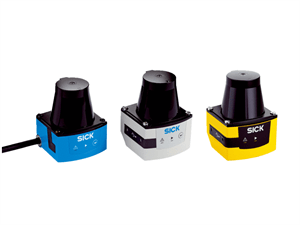
In AGV systems, laser collision sensors serve as “safety sentinels,” detecting obstacles and triggering evasive actions to protect personnel and equipment. Their selection and deployment determine AGV adaptability and reliability in complex environments. This guide examines laser sensor principles, performance metrics, and selection strategies.


Core Functions: The Intelligent Safety Barrier

Non-Contact Precision Detection

Time-of-Flight (ToF) technology: Measures obstacle distance with ±1cm–±5cm accuracy.

Multi-zone protection: Configurable “warning” (AGV deceleration) and “danger” (emergency stop) zones.


Environmental Resilience

Immune to ambient light/temperature; operates in dust/oil (IP67 rated).

Explosion-proof versions available for hazardous areas (chemical/oil facilities).


Key Technical Parameters

1.Detection Performance

Scanning Angle: 270° (single-side coverage) or 360° (full protection).

Detection Range: ≥4m @ 10% reflectivity (dark objects); 10–20m @ 90% reflectivity.

Response Speed: ≥25Hz refresh rate; <100ms emergency stop reaction.


2.Smart Features

16 configurable safety zones for different AGV movements (forward/sideways/rotation).

Dual-purpose obstacle avoidance and navigation via point cloud data.


Precision Selection: Four Dimensions

1.Environmental Complexity

Indoor warehouses: 270° scanner (e.g., AS-33C); ≤1° resolution; ≥8m range @ 10% reflectivity.

Outdoor/hazard zones: Explosion-proof + wide-temperature (-30°C–70°C) models.

Multi-AGV fleets: CAN/RS485 support for synchronized collision avoidance.


2.Performance-Cost Balance

Scenario

Solution

Cost-Saving Tip

Light indoor AGVs

Single 270° side-mounted sensor

Reuse SLAM point cloud data

Heavy forklift AGVs

Dual 360° diagonal sensors

Add physical bumpers as backup

Dynamic environments

High-speed model (≥50Hz)

Multi-zone networking


3.Reliability Standards

IP67 dust/water resistance; ≥5Grms vibration tolerance.

100,000-hour MTBF for 24/7 operation.


4.Integration Simplicity

Plug-and-play with AGV controllers (CANopen/EtherCAT).

Compact design (e.g., 50×72mm) for top/bottom mounting.


Critical Selection Avoidances

Verify real-world performance: Demand third-party test reports for low-reflectivity (10%) scenarios.

Reject closed protocols: Prioritize MODBUS/CAN over proprietary systems to reduce integration costs.

Simulate harsh conditions: Test under strong light/high-reflectivity floors to prevent false triggers.


Building Collision-Free Logistics

Laser sensor selection underpins AGV safety. From cost-effective single-sensor setups for compact robots to multi-sensor fusion for smart factories, scenario-aligned solutions maximize protection.


Seeking High-Precision AGV Collision Sensors?
We provide full-scenario solutions:

Comprehensive Range: 270°/360° sensors; explosion-proof models (-30°C–70°C).

Smart Integration: Native CAN/EtherCAT/PROFINET support.


Customization:

Mounting adapters (bottom/side)

16-zone dynamic protection

Point cloud API for navigation


Lifecycle Support: Testing → diagnostics.


Equip Your AGVs with Intelligent Safety!
Contact our team for tailored solutions.


Core Value:
Scenario-Optimized Design – Solutions tailored to AGV mobility, reflectivity, obstacle types.
Industrial Durability – IP67 housing, 100k-hour MTBF, 50G shock resistance.
Open Ecosystem – Protocol SDKs and debugging tools for seamless integration.


AGV’s Power Guardian: Power Management Module Selection and Application Guide

AGV’s Power Guardian: Power Management Module Selection and Application Guide

In AGV (Automated Guided Vehicle) systems, the Power Management Module (PMM) acts as the “neural command center,” monitoring battery health, controlling charging/discharging, and delivering stable power to controllers, sensors, and actuators. Its performance directly impacts AGV endurance, reliability, and lifecycle costs. This guide explores PMM selection for robust AGV energy architectures.


Core Functions of PMM

1.Intelligent Battery Monitoring

Real-Time Tracking: High-accuracy ADC circuits monitor voltage, current, temperature, and internal resistance.

SOC/SOH Calculation: ±3% precision for State of Charge (SOC) and State of Health (SOH).

Predictive Diagnostics: Alerts for aging/failure risks based on resistance changes and capacity decay.


2.Precision Charging Control

Multi-Stage Charging: CC-CV-float modes; ≤5ms switching between contact (100A+) and wireless (3-20kW) charging.

Dynamic Power Adjustment: Auto-scales current (e.g., 50% reduction in cold environments) to prevent lithium plating.


3.Efficient Power Distribution

Wide Input Range: 24V–72V input; ±1% stable outputs (48V motors, 24V controllers, 5V/3.3V sensors).

High Conversion Efficiency: >97% efficiency via ZVS topology, minimizing heat loss.


Selection Guide: Four Critical Dimensions

1.Power Density & Efficiency

AGV Type

Solution

Key Requirements

Light Indoor AGVs

Integrated PMIC

≥95% efficiency; <10×10mm

Heavy Forklift AGVs

Modular DC/DC regulators

≥30A output; ≥98% efficiency

Outdoor AGVs

Wide-temp modules

±20% input voltage tolerance

Avoid modules <92% efficiency: Every 3% drop reduces runtime by 7%

2.Environmental Resilience

Protection: IP54+ (dust/water resistance); ≥5Grms vibration resistance.

Certifications: UN38.3 + GB/T 31467 compliance; OVP/OCP/short-circuit protection.


3.Communication & Intelligence

Protocols: Native CAN/RS485 support for real-time SOC/fault data sync.

Predictive Maintenance: Battery Health Index (HI) calculation and runtime prediction.


4.Scalability & TCO

Modular Design: Parallel expansion for multi-battery setups; configurable power rails.

Lifecycle Cost: Solutions with >3,000 cycles reduce 3-year maintenance costs by 40% despite 15% higher upfront cost.


Powering Uninterrupted Logistics

Precise PMM selection ensures AGV energy efficiency. Whether compact PMICs for sorting robots or multi-rail regulators for heavy AGVs, scenario-aligned solutions maximize ROI.


Seeking High-Reliability PMM Solutions for AGVs?
We specialize in AGV power components:

Multi-Voltage Modules: 24V–72V input; 3.3V/5V/24V/48V outputs (98% efficiency).

Smart BMS: Health algorithms; CAN/RS485 protocol support.

Rugged Design: IP67 housing; -40°C to 85°C operation; EMC Class A certified.

Lifecycle Support: Design → echelon reuse.


Transform Your AGV with Intelligent Power Management!
Contact our team for tailored solutions.

Core Value:
Scenario-Optimized Design – PMM architectures tailored to load, environment, and scheduling.
Industrial Reliability – 100,000-hour MTBF; 50A peak current support.
Seamless Integration – Open BMS protocols/SDKs for PLC/navigation system integration.


AGV’s Energy Station: Automatic Charging System Selection and Application Guide

AGV’s Energy Station: Automatic Charging System Selection and Application Guide

In AGV (Automated Guided Vehicle) operations, automatic charging systems serve as “energy stations,” enabling 24/7 uninterrupted workflows. From contact-based charging contacts to wireless modules, technology selection directly impacts AGV endurance, reliability, and adaptability. This guide analyzes core solutions to help build intelligent energy management.


Core Functions: Enabling Seamless Operations

1.Maximize Uptime

Opportunity Charging: Top-up during brief stops.

Fast Charging: High-current replenishment between tasks.
→ Reduces manual charging downtime, boosting utilization by 25%.


2.Enhance Safety

Spark-free contacts (e.g., carbon brush design).

Fully sealed wireless modules.
→ Eliminates short-circuit risks in dust/moisture.


3.Lower TCO

Automation cuts labor costs.

Extends LiFePO4 battery life (2,000+ cycles).


Technology Comparison

1.Contact-Based Charging: Industrial Workhorse

Key Components:

Wear-resistant copper/UPE contacts (±2mm tolerance; 100,000+ cycles).

Smart chargers (0-60V/0-200A; 94% efficiency; CC/CV/float modes).

Best For: Heavy forklift AGVs (100A+ fast charging); fixed-route systems.

Limitations: Mechanical wear; condensation sensitivity.


2.Wireless Charging: Flexible Energy Manager

Core Tech:

Magnetic resonance coupling (85%+ efficiency; 5-15cm gap tolerance).

Auto-routing to charging pads at <20% battery.

Advantages: Zero contact wear; IP67 rating (oil/corrosion resistance).

Best For: Cleanrooms; multi-AGV warehouses; explosive environments.


Precision Selection Guide

1.Power & Efficiency

Heavy Forklifts (48V/400Ah)*: Contact-based (100A+) → 1.5hr full charge.

Light AMRs (24V/60Ah)*: Wireless (3-5kW) → 80% in 2hr.


2.Environmental Fit

Dust/moisture: IP67 wireless or sealed contacts.

Freezer (-30°C): BMS with temperature compensation.


3.Integration Complexity

Protocols: CAN/RS485 for SOC sync.

Scalability: Multi-charger cascading (e.g., 10-unit clusters).


4.TCO Optimization

High-frequency use (>3 charges/day): Wireless pays back in 2 years despite higher upfront cost.


Critical Avoidances:

Over-specification: Match charger output to battery C-rate.

Closed protocols: Reject proprietary systems to avoid ROS integration costs.


Powering Uninterrupted Logistics

Optimal charging system selection underpins AGV efficiency. Whether choosing millisecond contact charging for production lines or wireless for flexible warehouses, scenario alignment maximizes ROI.


Seeking Reliable, Compatible AGV Charging Solutions?
We deliver:

Full-Scenario Coverage: Contact-based (15-250A), wireless (3-20kW).

Smart Management: BMS protocol development (CAN/RS485); cluster scheduling.

Rugged Design: IP67, -30°C to 70°C, 5Grms vibration resistance.

Lifecycle Support: Design → maintenance optimization.


Power Your AGVs with Limitless Energy!
Contact us for tailored solutions.

Core Value:
Scenario-Driven Architecture – Charging systems optimized for load, duty cycle, environment.
Industrial Reliability – 100,000+ contact cycles; 100,000-hour MTBF wireless.
Seamless Integration – Native EtherCAT/PROFINET support.


AGV’s Power Heart: 24V LiFePO4 Battery Selection and High-Cycle Life Analysis

AGV’s Power Heart: 24V LiFePO4 Battery Selection and High-Cycle Life Analysis

In AGV (Automated Guided Vehicle) systems, lithium battery packs serve as the “power heart,” delivering sustained and stable energy. Among these, 24V LiFePO4 (LFP) batteries have emerged as the industrial AGV standard due to their safety, long cycle life, and environmental resilience. This guide explores their technical advantages and selection logic to help build efficient AGV power systems.


Why 24V LiFePO4 Dominates AGVs?

1.Safety: Non-Negotiable for Industry

Exceptional thermal stability (decomposition at 700°C vs. 200°C for ternary lithium), preventing thermal runaway during overcharge/short-circuit.

Chemically inert: Passes nail penetration and crush tests; no heavy metal pollution.


2.Cycle Life: TCO Optimization Driver

2,000+ cycles at 80% DoD (high-end cells: 3,000–5,000 cycles), doubling ternary lithium’s lifespan.

Minimal degradation: >80% capacity retention after 2,000 cycles.


3.Environmental Resilience

Wide temperature range: Operates at -20°C to 60°C (charge: 0°C–45°C).

Vibration-resistant: Reinforced casing (e.g., steel shell) withstands AGV shocks.


Precision Selection: Four Critical Dimensions

1.Voltage & Capacity

Voltage: 24V for light-duty AGVs; 48V/72V for heavy loads.

Capacity: Calculate based on power draw. Example: 800W load requires 24V 60Ah for ~1.8h runtime.


2.Discharge Performance

Continuous discharge: ≥1C (e.g., 100A for 100Ah battery).

Peak current: ≥3C for acceleration/climbing.


3.Communication & BMS

Protocols: CAN/RS485 for real-time SOC/temperature/fault data.

Protections: Multi-point monitoring, active balancing, overcurrent cutoff.


4.Certifications & Build

IP Rating: IP54–IP67 (prevents dust/liquid damage).

Certifications: UN38.3 + GB/T 31467 compliance.

Structure: Shock-absorbing metal housing.


Scenario-Based Solutions

Light Indoor AGVs: 24V 60Ah, IP54, CAN support (4–6h runtime @800W).

Outdoor Heavy AGVs: 48V 200Ah, IP67, wide-temperature BMS (-30°C), 2C fast charge.

High-Frequency AMRs: 24V 100Ah, 3,000+ cycles, active balancing.


Critical Avoidances:

Reject capacity-exaggerated cells: Demand 0.2C discharge curves + third-party test reports.

Never use “naked cells”: BMS-less packs accelerate degradation by 300%.


Powering Uninterrupted Logistics

Selecting the right 24V LiFePO4 battery is pivotal for AGV efficiency and TCO optimization. Whether for compact robots or smart factories, scenario-aligned solutions maximize ROI.

Seeking High-Safety, Long-Life AGV Batteries?
We specialize in AGV power solutions:

Custom Packs: 30–400Ah, CAN/RS485 support.

Industrial Design: IP67, wide-temp BMS (-30°C–70°C), UN38.3/CE certified.

Smart Management: SOC estimation, remote lock, OTA updates.

Lifecycle Support: From design to recycling.


Power Your AGVs with Confidence!
Contact our team for tailored solutions.

Core Value:
Scenario-Optimized Design – Cells/BMS tailored to load, runtime, environment.
Lifespan Guarantee – ≥80% capacity after 2,000 cycles; warranty support.
End-to-End Service – Mechanical integration, protocol development, echelon reuse.


AGV’s Neural Network: Comprehensive Guide to Communication Module Selection and Application

AGV’s Neural Network: Comprehensive Guide to Communication Module Selection and Application

In the intelligent ecosystem of AGVs (Automated Guided Vehicles), communication modules act as the “vascular system,” enabling high-speed data exchange between vehicles, dispatch centers, and field equipment. The choice between wireless (Wi-Fi/5G/LoRa) and wired (Ethernet/RS-485) technologies directly determines system real-time performance, stability, and scalability. This guide explores AGV communication modules’ core value and selection logic to help build an efficient logistics network.


Core Mission: AGV’s “Data Lifeline”

1.Real-Time Task Scheduling

Receives commands (e.g., path planning, loading/unloading) with millisecond-level response for seamless operations.

Example: 5G ultra-low latency (<10ms) supports dynamic collision avoidance in 100+ AGV fleets.


2.Multi-Vehicle Coordination

V2V (Vehicle-to-Vehicle) communication exchanges real-time position/speed data for centimeter-level collision prevention.

Critical Scenario: LoRa self-organizing networks synchronize movement in narrow passages.


3.Predictive Maintenance

Continuously uploads motor temperature, battery health, and navigation accuracy for failure prediction.


Communication Technology Comparison

Wireless Solutions

Technology

Advantages

Limitations

Best For

Wi-Fi 6

High bandwidth (9.6Gbps)

Weak wall penetration

Indoor AMR fleets

5G Private

Ultra-low latency (1ms)

High deployment cost

Ports/Auto production

LoRa

Long range (2km), low power

Low speed (0.3–50kbps)

Campus/Agricultural AGVs

Tip: Prioritize 5GHz band + WPA3 encryption for Wi-Fi to avoid interference.

Wired Solutions

Technology

Advantages

Limitations

Best For

Gigabit Ethernet

High bandwidth (1Gbps)

Complex cabling

Charging station data links

EtherCAT

Microsecond synchronization

High master station cost

Precision assembly AGVs

RS-485

Strong noise immunity

Low speed (10Mbps max)

Small magnetic-guided AGVs


Selection Guidelines: Four Key Rules

1.Match Latency Requirements

μs control (e.g., servo sync): EtherCAT/PROFINET

ms response (collision avoidance): 5G/Wi-Fi 6

Second-level updates (status monitoring): LoRa/4G


2.Adapt to Environments


Environment

Solution

Critical Safeguards

High EMI workshops

Fiber Ethernet + shielding

EN 61000-6-2 certification

Multi-floor warehouses

Wi-Fi 6 + roaming optimization

≥1 AP per 500m²

Outdoor long-distance

5G+LoRa dual-mode

-40°C to +85°C modules


3.Plan Bandwidth Redundancy

Basic AGV data: 6KB/s (position + sensors)

High-load scenarios (3D avoidance): ≥50Mbps (e.g., 5G CPE)


4.Balance Security & Cost

Industrial encryption: MAC whitelisting + AES-128

TCO optimization: RS-485 + LoRa cuts costs by 40%


Advancing Smart Logistics

Precise communication module selection underpins AGV system efficiency. Whether deploying Wi-Fi 6 for indoor fleets or 5G+fiber for outdoor heavy-duty AGVs, scenario-aligned solutions unlock maximum potential.

Seeking robust, multi-protocol communication solutions for your AGVs?
We specialize in AGV core components, offering:


Full Protocol Coverage: Wi-Fi 6/5G CP/LoRa/EtherCAT modules


Industrial Durability: EMC Class A certified, IP67 rated, -40°C to +85°C operation


Custom Services:

Dual-network solutions (e.g., 5G+LoRa redundancy)

Protocol converters (RS-485 to PROFINET)

Antenna optimization & signal testing


Transform your AGV network with professional communication solutions!
Contact us for tailored designs and lifecycle technical support.

Core Value Propositions:
Scenario-Driven Architecture – Solutions scaled to AGV count, mobility range, and data volume
Industrial Reliability – 100,000-hour MTBF, IP67 dust/oil resistance

Seamless Integration – SDKs & tools for quick PLC/scheduler integration