AGV’s Agile Feet: Steering Wheel Drive Assembly Technology and Selection Guide

AGV’s Agile Feet: Steering Wheel Drive Assembly Technology and Selection Guide

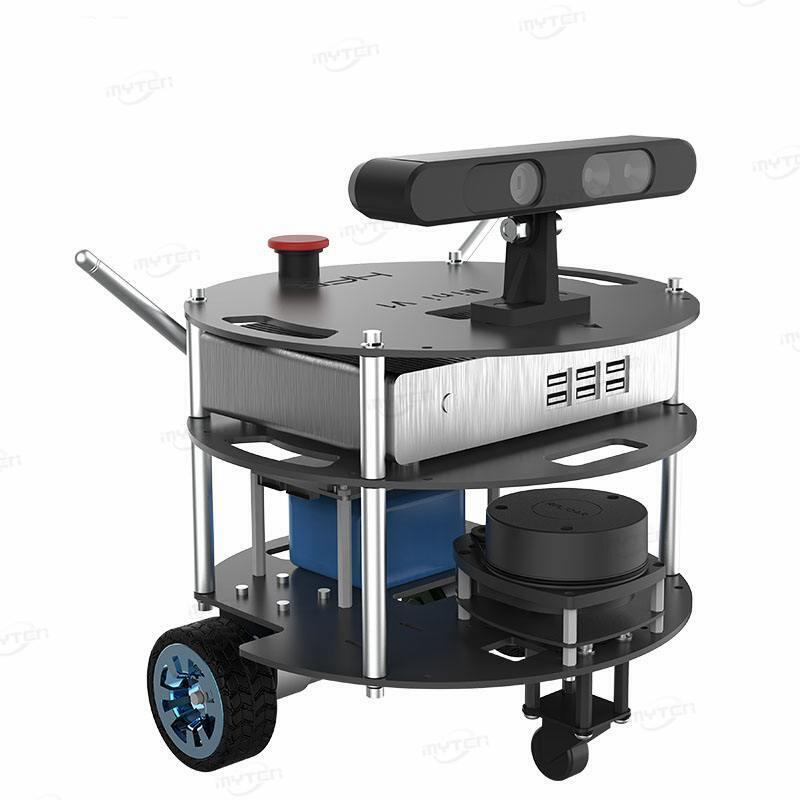
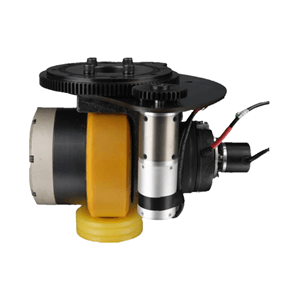
In AGV (Automated Guided Vehicle) motion systems, the steer drive assembly serves as both the “power heart” and “steering pivot.” This precision motion unit—integrating motors, reducers, and encoders—directly determines AGV’s load capacity, motion accuracy, and environmental adaptability. A well-selected steer drive system empowers smart logistics with efficient, flexible, and stable mobility.

Steer Drive Assembly: The Foundation of AGV Motion Performance


Steer drives fuse three core components into a compact power module:

Drive Motor: Core power source (brushless DC motors dominate for efficiency/reliability).

Precision Reducer: Amplifies torque and regulates speed (planetary gearboxes common; >90% efficiency).

High-Resolution Encoder: Real-time feedback on wheel speed/steering angle (±0.1° accuracy).


Core Motion Modes & Wheel Selection

1.Horizontal Steer Drive (Conventional Steering)

Structure: Motor parallel to wheel axle; horizontal rotation via steering bearing.

Advantages: High load capacity (3–5 tons/wheel), mature design, easy maintenance.

Applications: Heavy-duty pallet AGVs, large container handlers.


2.Low-Profile Steer Drive (Compact Omnidirectional)

Structure: Motor perpendicular to wheel axle; steering motor integrated inside wheel.

Advantages: Ultra-low height (<150 mm), saves chassis space, suits narrow aisles.

Applications: Underride AGVs, tote-handling robots.


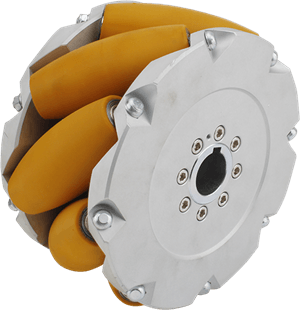
3.Omnidirectional Solution: Mecanum Wheels


Structure: 45° angled rollers along the rim; enables omnidirectional movement (forward/lateral/diagonal/spin) via four-wheel differential control.

Core Value:

Eliminates steering mechanisms, simplifying mechanical design.

Achieves millimeter-precision docking in tight spaces (e.g., production line integration).

Maximizes path planning freedom and obstacle avoidance efficiency.


Applications: Automotive assembly, high-density warehouses, surgical instrument delivery.


Five Golden Rules for Steer Drive Selection

Selection must balance mechanical specs, electrical performance, and scenario needs:

1.Load Capacity: The Safety Baseline


Static Load: Single-wheel load ≥ (AGV dead weight + max payload) × safety factor (1.2–1.5).

Dynamic Impact: Reserve 20% margin for start-stop inertia (e.g., for 1-ton payloads, select 1.5-ton-rated drives).


2.Motion Performance: Balancing Speed & Precision

Speed Matching:

Warehouse AGVs: 0.8–1.5 m/s

High-speed line delivery: ≥2 m/s (requires high-power motors).

Positioning Accuracy:

Encoder resolution ≥ 17-bit (131,072 PPR) ensures ±10 mm docking precision.

Repeatable steering accuracy <0.5° (critical for path tracking).


3.Environmental Suitability: Ensuring Reliability

IP Rating:


Clean indoor: IP54 (dust/water splash resistance).

Outdoor/oily/damp: IP65/IP67 (water jets, oil corrosion resistance).

Temperature Range: -25°C startup for cold storage; +80°C tolerance for foundries.


4.Omnidirectional Requirements

Need lateral/diagonal movement? → Choose Mecanum wheels or omnidirectional drives.

Aisles <1.5× vehicle length? → Omnidirectional solutions enhance maneuverability.

Docking accuracy <±5 mm? → Mecanum wheels excel in zero-radius rotation.


5.Electrical & Interface Compatibility

Voltage: 24V/48V DC standard; 72V for high power.

Protocols: CANopen/EtherCAT for real-time control; Modbus RTU for cost-sensitive cases.

Mounting: Flange size/bolt pattern must match AGV chassis design.


 Selection Pitfalls: Avoiding Four Common Mistakes

Ignoring Peak Torque: Focus only on rated power? → Reserve 2× rated torque for start-stop/climbing overloads.

Low-Resolution Encoders: Cheap solutions cause positioning drift → Demand ≥17-bit encoders.

Unverified IP Ratings: Fake certifications lead to circuit corrosion → Validate testing reports.

Ignoring Maintenance Costs: Drives without labyrinth seals lose 50% lifespan in dust → Prioritize sealed bearings.


AGV’s Intelligent Eyes: Vision Camera Navigation Technology and Selection Guide

AGV’s Intelligent Eyes: Vision Camera Navigation Technology and Selection Guide

In the evolution of AGVs (Automated Guided Vehicles) toward greater intelligence, vision cameras are emerging as their “core sensory organs” for environmental perception. Serving not only as the “brain” of visual navigation systems but also as a “versatile assistant” for obstacle avoidance and task execution, vision technology equips AGVs with autonomous positioning, path planning, and decision-making capabilities. This provides critical support for flexible, high-precision logistics scenarios.

Vision Cameras: AGV’s “Environmental Perception & Navigation Engine”


Vision systems perform two core functions in AGVs: autonomous navigation and auxiliary perception.

1.Visual Navigation: The Freedom of Trackless Movement

Working Principle:
Cameras continuously capture ground textures, natural features, or pre-set markers (e.g., reflectors, QR codes). Combined with SLAM (Simultaneous Localization and Mapping) algorithms, AGVs build real-time environmental maps while calculating their own position and heading.

Key Advantages:


No Infrastructure Dependency: Eliminates magnetic tapes/reflectors, reducing retrofit costs—ideal for dynamic environments.

High Flexibility: Paths adjustable via software.

Natural Feature Utilization: Leverages existing structures (racks, floor patterns) as navigation references.


2.Auxiliary Environmental Perception: Guardian of Safety and Intelligence

Core Functions:

Obstacle Avoidance: Detects dynamic obstacles (personnel, forklifts), low objects (pallets), or overhead barriers.

Precision Docking: Guides robotic arms for millimeter-accurate rack/machine alignment.

Status Monitoring: Verifies cargo positioning, fork retraction, or loading point conditions.


Selecting “Intelligent Eyes” for Your AGV: Critical Selection Factors

Selection must align with navigation accuracy, environmental complexity, and functional requirements.

1.Core Performance Parameters


Resolution:
Higher pixels enhance detail recognition (e.g., long-range code reading, small-object detection).
Navigation: ≥2MP; Precision tasks: ≥5MP.

Frame Rate (FPS):
High FPS (≥30fps) prevents motion blur. *AGVs ≥2m/s: ≥60fps.*

Field of View (FOV):
Wide horizontal FOV (70°–120°) covers broad paths; narrow FOV focuses on distant targets.
Navigation: Wide-angle; Precision docking: Adjustable focus.

Global Shutter:
Eliminates motion blur—essential for industrial AGVs in motion.


2.Environmental Adaptability


Low-Light Performance:
High-sensitivity sensors or Wide Dynamic Range (WDR) prevent over/underexposure in high-contrast scenes.

Integrated Lighting:
Built-in/external LED lighting (red/white/IR) ensures stable imaging in darkness or at night.

Industrial Robustness:

IP67/IP69K rating (dust, high-pressure wash, oil resistance).

Vibration-resistant design to prevent image blur.

Operating temperature range: -30°C to +70°C (cold storage/high-temperature workshops).


3.Smart Features & Integration


Embedded Processing:
Edge-computing cameras run vision algorithms locally (feature extraction, obstacle segmentation) for faster response.

Multi-Sensor Synchronization:
Hardware-triggered sync with LiDAR/IMU enables precise data fusion.

Communication Interfaces:
GigE Vision, USB3.0 for high-speed data; Industrial protocols (EtherNet/IP, PROFINET).


Vision Empowerment: Shaping the Future of Intelligent Manufacturing

Vision cameras transform AGVs from “track followers” into “environment interpreters.” Optimal selection determines system reliability in complex scenarios:

High resolution + global shutter ensure image clarity.

Environmental adaptability overcomes industrial challenges.

Smart integration closes the system control loop.


AGV’s Stabilizing Anchor: Technology and Selection Guide for Inertial Navigation Sensors (IMU)

AGV’s Stabilizing Anchor: Technology and Selection Guide for Inertial Navigation Sensors (IMU)

In the intelligent navigation systems of AGVs (Automated Guided Vehicles), how can vehicles maintain smooth and precise operation when external reference signals like magnetic tape or QR codes are temporarily lost or disrupted? The Inertial Measurement Unit (IMU) serves as the “silent guardian” addressing this challenge. Acting as AGV’s built-in precision “balancer” and “trajectory recorder,” it continuously monitors the vehicle’s motion state, compensates for positioning errors, and significantly enhances AGV stability and reliability in complex environments.


IMU: The Core of AGV’s “Intrinsic Perception”

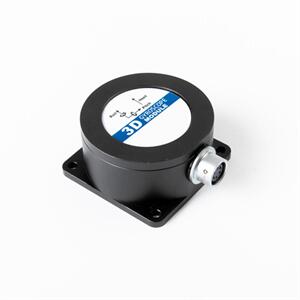
At the heart of the Inertial Navigation Sensor (IMU) lies its use of two key components—gyroscopes and accelerometers—to perform dead reckoning and attitude sensing by measuring AGV’s intrinsic motion, independent of external signals.

Core Working Principles:

  Gyroscope: Measures the AGV’s angular velocity (rotation speed and direction) around three axes (pitch, roll, yaw) in real time. Analogous to the human inner ear, it senses turning and tilting motions.

  Accelerometer: Measures linear acceleration (rate of velocity change) along three axes (X, Y, Z). Like the human motion sensor, it detects acceleration, deceleration, and gravitational effects.

  Data Fusion: Complex algorithms (e.g., Kalman filtering) within the IMU or AGV controller fuse and integrate gyroscope and accelerometer data to compute real-time attitude angles (pitch, roll, heading), velocity, and relative displacement.


Critical Roles in AGV Navigation:

  Motion Stability Control: Monitors body tilt angle in real time to prevent rollover, especially on slopes, uneven surfaces, or during high-speed turns.

  Heading Maintenance & Correction: Maintains AGV direction during short-term loss of primary signals (e.g., crossing seams, metal zones, reflector-free areas), preventing deviation.

  Positioning Error Compensation: Combines with wheel odometry (ODO) to correct slippage/wear-induced errors or fuses with absolute positioning signals (QR/RFID) for smoother, continuous positioning—boosting accuracy in long straight paths or turns.

  Enhanced Motion Performance: Enables smoother acceleration/deceleration and precise turning control, improving efficiency and ride/cargo comfort.


Key Advantages:

  High Autonomy: Operates independently of external signals (light, ground tags, reflectors).

  Rapid Response: Delivers high-frequency motion updates (typically hundreds of Hz).

  Short-Term Precision: Provides reliable attitude and heading data during brief signal loss (seconds to minutes, depending on IMU grade).

  Environmental Robustness: Unaffected by light, dust, ground materials, or EM tags (though vibration/temperature require attention).


Selecting a Reliable “Stabilizing Anchor” for Your AGV: Critical Factors

IMU performance directly impacts AGV stability and positioning during external signal loss. Focus on these core parameters:

Accuracy Grade (Critical):

  Gyro Bias Stability: Measures drift in angular velocity output when static (°/h). Lower values = higher accuracy. Industrial AGVs typically require 1–10 °/h; high-precision apps demand <1 °/h.

  Accelerometer Bias Stability: Measures drift in acceleration output (mg). Lower values improve velocity/displacement calculation.

  Angle Random Walk / Velocity Random Walk: Reflects noise levels, affecting short-term precision.


Measurement Range:

  Gyroscope Range: Must cover max AGV angular velocity (e.g., during sharp turns). Too small a range causes saturation. Typical: ±100°/s to ±2000°/s.

  Accelerometer Range: Must cover max acceleration/deceleration (including shocks). Typical: ±2g to ±16g or higher.


Output Rate & Latency:
High output frequency (≥100Hz, ideally >200Hz) and low latency are critical for responsive, smooth control—especially at high speeds or during precise path tracking.

Environmental Suitability:

  Operating Temperature Range: Must cover extremes (e.g., cold storage: -20°C; workshops: +70°C).

  Vibration Resistance: AGVs operate in vibratory environments. IMUs need robust anti-vibration design (e.g., mechanical filtering, algorithms). Check specs like PSD (Power Spectral Density).

  IP Rating: Basic protection (e.g., IP65) against dust/water splashes.


Calibration & Compensation:

  Factory Calibration: High-quality IMUs undergo precision calibration for bias, scale factor, and axis misalignment, with parameters provided.

  Temperature Compensation: Built-in sensors and algorithms minimize temperature-induced drift—essential for industrial use.

  Field Calibration Support: Ease of on-site calibration (e.g., 6-position method) to correct mounting errors.


Interface & Integration:

  Communication Interface: UART (TTL/RS232), SPI, CAN, CANopen, EtherCAT, etc. Must match AGV controller.

  Supply Voltage: Typically DC 5V, 12V, or 24V; must align with onboard power.

  Size & Mounting: Compact, rugged housing with secure mounting (e.g., screw holes) to avoid stress-induced errors.


Stability and Reliability: Rooted in Intrinsic Strength

Though not directly “seeing” the external world, the IMU is AGV’s “stabilizing anchor,” ensuring precise heading, steady posture, and continuous positioning in dynamic environments. Especially in multi-sensor fusion systems, high-performance IMUs are indispensable for enhancing robustness against signal loss. Their optimal selection is paramount to AGV safety, stability, and efficiency.


AGV’s Positioning Key: Technology and Selection Guide for QR Code/RFID Readers

AGV’s Positioning Key: Technology and Selection Guide for QR Code/RFID Readers

In the dynamic network of intelligent logistics systems, the precise navigation of AGVs (Automated Guided Vehicles) relies not only on path tracking but also on accurate positioning at key nodes. Serving as AGVs’ “intelligent eyes,” QR code readers and RFID readers identify ground markers or station information, providing crucial positioning anchors. This enables millimeter-precision docking, station recognition, and task dispatching, significantly enhancing the flexibility and intelligence of automated systems.


Dual Solutions for Positioning: QR Code Readers vs. RFID Readers

1.QR Code Readers: Vision-Based Positioning Experts

Working Principle:
Industrial-grade cameras scan pre-installed QR code labels (e.g., QR codes, Data Matrix codes) on the ground or pillars, decoding encrypted data such as position coordinates, station IDs, or task commands.

Key Advantages:


Ultra-High Precision: Achieves millimeter-level repeatable positioning accuracy, ideal for demanding scenarios like pallet docking or machine loading/unloading.


High Data Capacity: A single QR code can store extensive information (e.g., coordinates, target stations, operation commands), enabling flexible dispatching.


Visual Clarity: Labels are clearly visible, simplifying deployment, maintenance, and manual verification.


Typical Applications:
High-precision docking points, process handover stations, warehouse slot identification, path intersection calibration.

2.RFID Readers: Contactless Identification Pioneers

Working Principle:
Radio frequency signals automatically identify RFID tags (passive or active) attached to stations, racks, or floors, reading their unique IDs or stored data.

Key Advantages:


Contactless & Penetrative: No line-of-sight required; penetrates non-metallic materials (e.g., wood, plastic, dust, oil), suitable for harsh environments.


Batch Identification: Reads multiple tags simultaneously (e.g., warehouse inventory checks), boosting efficiency.


Environmental Robustness: Tags have no exposed chips, resisting high temperatures, moisture, corrosion, and offering long lifespans.


Typical Applications:
Station authentication, warehouse/rack identification, work-in-progress tracking, AGV-task binding, high-throughput checkpoints.


Selecting the “Positioning Key” for Your AGV: Critical Factors

Selection must align with application scenarios, precision requirements, and environmental conditions.

1.QR Code Reader Selection Criteria:


Resolution & Decoding Capability:


High resolution ensures long-distance or small-barcode recognition.


Advanced decoding algorithms (e.g., handling damaged, blurred, low-contrast, or distorted codes) ensure reliability in complex conditions.


Reading Distance & Depth of Field:
Match AGV mounting height (chassis-to-ground) and scanning range (e.g., wide aisles).


Lighting & Environmental Adaptability:


Built-in high-brightness lighting (white/red/IR) with auto-adjustment resists ambient light (glare/dimness).


Industrial protection (IP65/IP67+) against dust, water, vibration, and shock.


Communication Interfaces:
Ethernet (TCP/IP, EtherNet/IP), RS232/485, or IO-Link; must integrate with AGV control systems.


2.RFID Reader Selection Criteria:

Frequency Band:


LF (125 kHz): High penetration, resists metal/liquid interference; short range (<0.5m), ideal for precise triggering.

HF (13.56 MHz): Medium range (~1m), fast data transfer, high standardization (ISO 15693/14443).

UHF (860–960 MHz): Long range (meters to 10m+), batch reading, cost-effective; sensitive to metal/liquid (requires specialized tags).


Reading Distance:
Define maximum effective range, considering mounting position, tag orientation, and interference.


Multi-Tag Handling:
Superior anti-collision algorithms essential for dense tag areas (e.g., warehouse entrances).


Interference Resistance:
Choose models with metal-resistant designs and shielding near motors, inverters, or metallic environments.


Protection Rating & Interfaces:
Industrial-grade robustness and compatibility (same as QR code readers).


3.Universal Considerations:


Mounting & Size: Adapts to AGV chassis constraints; flexible brackets preferred.


Power Supply: Typically DC 24V; must match onboard power.


Response Speed: Millisecond-level reaction critical for high-speed AGVs.


System Compatibility: Ensure seamless integration with AGV controllers via data formats/communication protocols.


Precision Positioning: Driving Intelligent Transformation

QR code and RFID readers empower AGVs with “scene awareness” and “position cognition,” forming the core of complex task dispatching and lean logistics operations. Their optimal selection directly determines an AGV system’s positioning accuracy, operational efficiency, and adaptability to diverse scenarios.

 

AGV’s Guiding Eye: Principles and Selection Guide for Magnetic Navigation Sensors

AGV’s Guiding Eye: Principles and Selection Guide for Magnetic Navigation Sensors

In automated logistics systems, AGVs (Automated Guided Vehicles) function as tireless intelligent carriers. At the core of their stable operation lies their “eyes” — the magnetic navigation sensors. These sensors silently detect magnetic tape tracks laid on the ground, guiding AGVs to move accurately and reliably along predefined paths. They are crucial for ensuring smooth automated workflows.


1.Magnetic Navigation Sensors: AGV’s “Track” Recognition Experts

Core Principle:

Magnetic navigation sensors use internal high-sensitivity magnetic sensing elements (such as

Hall sensors or magnetoresistive sensors) to continuously detect the stable magnetic field signals generated by pre-installed magnetic tapes on the ground. Like a train running on rails, AGVs rely on these sensors to interpret changes in magnetic field strength and direction in real time.


Precise Positioning and Correction:
When an AGV deviates from its path, the sensor instantly detects subtle differences in the magnetic signal and transmits deviation data to the AGV control system. The system then rapidly adjusts the speed of the drive wheels, achieving millisecond-level dynamic correction to ensure the vehicle always travels precisely along the centerline of the magnetic tape.


Key Advantages Highlighted:

Stable & Reliable Path: Unaffected by ambient light changes, minor ground stains, or dust; strong anti-interference capability.

Cost-Effective Implementation: Magnetic tape installation is relatively simple and low-cost, especially suitable for fixed-path scenarios.

High Positioning Accuracy: Achieves millimeter-level repeatable positioning precision, meeting stringent requirements like precise docking and accurate stopping.

Easy Maintenance: Physical damage to magnetic tapes is easy to detect and replace locally, reducing maintenance costs.


2.Choosing the “Wise Eyes” for Your AGV: Key Selection Factors

Selecting the right magnetic navigation sensor is fundamental to ensuring efficient and stable AGV operation. Key factors to consider include:


Detection Height & Sensitivity:

Detection Height: Refers to the effective sensing distance from the sensor base to the magnetic tape surface. Must account for AGV chassis height, ground flatness, and protective cover thickness. Ensure stable signal output even at maximum expected installation height.

Sensitivity: Determines the minimum magnetic field strength the sensor can reliably detect. High sensitivity provides stronger signal redundancy and stability in environments where tape magnetism may weaken (due to aging/contamination) or where metal interference exists.


Signal Output Type:

Analog Output: Provides continuous voltage/current signals, precisely reflecting the AGV’s offset relative to the tape center. Ideal for complex scenarios requiring high-precision continuous control (e.g., high-speed operation, precision docking).

Digital (Switch) Output: Provides simple “on-track/off-track” status signals. Lower cost, suitable for basic applications with simple paths requiring only tracking functionality.

Digital Communication Output (e.g., RS485, CANopen): Transmits richer data (position, status, diagnostics), facilitating system integration and advanced control. The preferred choice for intelligent AGV systems.


Environmental Suitability:

IP Rating: AGVs often operate in dusty, humid, or oily industrial environments. Sensors with high IP ratings (e.g., IP67/IP69K) effectively resist dust, moisture, and cleaning fluid ingress, ensuring long-term reliability.

Temperature Range: Must cover extreme temperatures in the AGV’s operating environment (e.g., cold storage or high-temperature workshops).

EMI Resistance: In areas near strong electromagnetic interference sources (motors, inverters), choose sensors with excellent EMC anti-interference design.


Mechanical & Electrical Properties:

Size & Mounting: Must fit AGV chassis space constraints and offer flexible mounting options (e.g., screw-fixed, snap-in).

Supply Voltage: Must match the AGV’s onboard power system (commonly DC24V).

Response Time: Critical for high-speed AGVs to ensure timely correction.


3.Precision Navigation Begins with Smart Selection

Though small, magnetic navigation sensors are the cornerstone of AGV intelligent mobility. Their performance and proper selection directly determine the accuracy, stability, and efficiency of AGV systems. Faced with diverse application scenarios and demands, understanding their working principles and mastering scientific selection methods is key to maximizing return on investment.


AGV LiDAR: The Core “Eyes” of Intelligent Logistics & Selection Guide

AGV LiDAR: The Core “Eyes” of Intelligent Logistics & Selection Guide

In modern intelligent logistics systems, LiDAR (Light Detection and Ranging), the core perception component of AGVs (Automated Guided Vehicles), undertakes the critical tasks of environmental perception, navigation & positioning, and safety obstacle avoidance. Its performance directly impacts the AGV’s positioning accuracy, operational efficiency, and safety. This article systematically analyzes the functional classification and key selection points of LiDAR to assist enterprises in optimizing AGV design.


1.Core Functions of LiDAR in AGVs

  Navigation & Positioning:

    Scans environmental features (e.g., reflectors, shelves, walls) to build maps in real-time and perform localization matching.

    Supports various modes including SLAM (Simultaneous Localization and Mapping) and reflector navigation.

    Achieves centimeter-level positioning accuracy (e.g., <10mm error within 5m).


  Safety Obstacle Avoidance:

    Dynamically monitors obstacles (including low-reflectivity targets) in the path.

    Triggers graded protective responses (e.g., speed reduction, braking).

    Offers a maximum protective range of up to 20 meters.

    Supports flexible configuration of up to 16 safety zones.


  Pallet Recognition & Auxiliary Positioning:

    Dedicated LiDAR models can accurately identify pallet positions (accuracy ±1.5mm).

    Can replace traditional encoders to enhance motion control accuracy.


2.LiDAR Types & Applicable Scenarios
  Based on functional requirements, LiDAR can be categorized into three types:


    Navigation LiDAR:

      Characteristics: Wide scanning angle (typically 270°–360°), long range (up to 50m), high angular resolution (up to 0.06°), high point cloud density (e.g., 60k points/s).

      Application Scenarios: Global path planning for large warehouse AGVs, unmanned forklifts.


  Obstacle Avoidance LiDAR:

      Characteristics: Focuses on close-range dynamic monitoring (e.g., 10m @70% reflectivity), high scan frequency (≥25Hz), strong resistance to vibration and shock, compact size (e.g., 50×50×72mm).

      Application Scenarios: Emergency braking protection in human-machine collaborative environments.


  Integrated Navigation & Obstacle Avoidance LiDAR:

      Characteristics: Combines 360° scanning and long-range detection (e.g., 40m) in a single device.Supports simultaneous triggering for multiple safety zones, reducing hardware costs.

      Application Scenarios: Medium/small AGVs or compact robots with space constraints.


3.Key Selection Parameter Guide

  Detection Range & Reflectivity Adaptability:

    Consider target reflectivity conditions (e.g., ensure ≥4m effective detection @10% reflectivity).

    Recommendation: Choose ≥20m range for warehouse environments; 8–10m for indoor service robots.


  Scan Frequency & Dynamic Response:

    Low-frequency LiDAR (e.g., 10Hz) suits low-speed AGVs (<0.5m/s).

    High-frequency LiDAR (e.g., 20–30Hz) is essential for high-speed, dynamic scenarios.

    Note: High frequency requires matching computational power to avoid processing delays.


  Environmental Robustness:

    Strong anti-ambient light capability (≥80,000 Lux) ensures stability in bright conditions.

    Vibration/shock resistance (validated by tests) and suitable IP rating are critical for industrial settings.


  Integration Convenience:

    Size & Interfaces: Compact LiDARs (e.g., super-hemispherical design) ease embedding. Type-C/Ethernet interfaces simplify cabling.

    Hardware-Software Synergy: Compatibility with mainstream navigation systems (e.g., SLAM algorithms) lowers development barriers.


4.Industry Trends & Selection Advice

  Miniaturization & High Performance: New-generation solid-state LiDARs reduce volume by 66% while increasing point frequency to 490k points/s, balancing wide FOV with precise perception.

  Multifunctional Integration: Single LiDAR units performing both navigation and obstacle avoidance offer cost-effective advantages.

  Automotive-Grade Reliability: Prioritize products validated through mass production (millions of units) for industrial applications.


Which LiDAR Does Your AGV Need?
  Matching the LiDAR type and parameters to your AGV’s load, speed, and environmental complexity (lighting/dynamic obstacles) significantly enhances system stability and reduces costs. We offer a full range of LiDAR solutions—from navigation & positioning to safety protection—with support for customized combinations and technical integration.


Contact our technical team now to get a tailored LiDAR selection plan and exclusive quotation for your AGV model!

Data sourced from publicly available industry technical documentation. Latest product specifications subject to actual technical communication.Through scientific selection, LiDAR will become the “core engine” powering your AGV’s intelligent upgrade. We look forward to empowering your logistics system with professional solutions for efficient and safe operation!


The Smart Way with AGV Chargers: Selecting the Right Match for Your Battery and Boosting Fleet Turnaround Efficiency

The Smart Way with AGV Chargers: Selecting the Right Match for Your Battery and Boosting Fleet Turnaround Efficiency

While the AGV battery is its powerhouse, the charger is the indispensable partner that keeps it fueled and ready for action. In today’s high-throughput logistics and manufacturing environments, simply plugging in isn’t enough. Intelligent charging systems are crucial for maximizing fleet availability, extending battery life, and optimizing operational efficiency. The key lies in selecting chargers that perfectly match your battery technology and implementing smart charging strategies to minimize downtime and maximize AGV utilization – boosting your overall fleet turnaround efficiency.


Beyond Plugging In: The Evolution of AGV Charging Gone are the days of one-size-fits-all chargers. Modern AGV charging demands sophistication:


1.Technology-Specific Charging Profiles: Chargers must be precisely tailored to the battery chemistry:

    Lead-Acid:Require specific voltage curves, absorption phases, float voltages, and periodic equalization charges. Mismatched charging destroys batteries.

    Lithium-ion (Li-ion):Demand strict adherence to voltage and current limits defined by the Battery Management System (BMS). Chargers communicate directly with the BMS for safe, optimal charging (CC/CV protocol). Using a lead-acid charger on Li-ion is dangerous and damaging.


 Charging Power Levels:   

Conventional Chargers: Lower power (e.g., 1-2 kW), suitable for overnight charging of lead-acid or smaller Li-ion packs.

   Fast/High-Power Chargers:Higher power (e.g., 5 kW, 10 kW, 20 kW+), essential for opportunity charging Li-ion batteries during short breaks. Significantly reduces charge time.


3.Charging Methods:

    Manual Plug-in:Operator connects the charger. Simple but prone to human error and forgetfulness.

    Automatic Connection:

        Fleet-Based: AGVs autonomously navigate to fixed charging stations when needed.

        Battery Swap:Depleted batteries are automatically swapped for charged ones at dedicated stations. Requires significant infrastructure.

        Inductive (Wireless) Charging:AGVs park over charging pads. Contactless, high convenience, lower efficiency than conductive, higher cost.


 Intelligence & Connectivity:    

Smart Chargers: Communicate with the AGV and/or central management system. Report status, errors, charging history.

    Integrated with Fleet Management Software (FMS):The FMS can intelligently dispatch AGVs for charging based on battery state, task queues, and overall fleet utilization needs. This is key to maximizing efficiency.


The Core Goal: Maximizing Fleet Turnaround Efficiency

The ultimate measure of charging success is how quickly an AGV can go from “depleted” back to “fully operational.” Intelligent charging directly impacts this:


1.Minimizing Charging Downtime:

    Fast Charging (Li-ion): Opportunity charging slashes the time AGVs spend stationary.

    Automation:Automatic connection eliminates manual plug-in delays and errors.

    Smart Scheduling (FMS):Charging happens during natural downtimes (e.g., loading/unloading) or when task queues are low.


2.Optimizing Battery Health & Lifespan:

     Perfectly Matched Profiles:Prevents under/overcharging, stress, and premature aging.

     BMS Communication (Li-ion):Ensures safe charging within optimal parameters, maximizing cycle life.

    Condition Monitoring:Smart chargers provide data for predictive battery maintenance.


3.Enabling Leaner Fleet Sizing:

    With faster, smarter charging (especially opportunity charging), fewer AGVs are needed to achieve the same throughput, as each spends more time working and less time charging/waiting to charge. This reduces capital expenditure.


Selecting the Smart Charger Solution: Key Considerations

Choosing the right charger system involves:


1.Battery Chemistry is Paramount:This is non-negotiable.Select chargers explicitly designed and programmed for your specific battery type (e.g., “LiFePO4 Charger,” “AGM Lead-Acid Charger”).

2.Required Charging Speed:Determine necessary charge power (kW) based on battery capacity (kWh) and desired charging window (e.g., 15 mins, 30 mins). Li-ion enables fast charging; lead-acid generally does not.

3.Charging Strategy:

    Will you use opportunity charging(requires fast Li-ion chargers & automation)

    Or rely on battery swap or conventional overnight charging

4.Connection Method:Manual, automated conductive, inductive? Balance cost, convenience, and reliability.

5.Integration Capability:Can chargers communicate with your AGV fleet management software for intelligent scheduling and monitoring? This is critical for high efficiency.

6.Scalability: Can the charging infrastructure easily expand with your fleet

7.Environment:Are chargers rated for the operating environment (dust, temperature, humidity)


Conclusion: Charging as a Strategic Enabler

AGV chargers have evolved from simple power supplies into intelligent efficiency engines. Selecting the right charger – perfectly matched to your battery technology and integrated within a smart fleet management strategy – is fundamental to unlocking maximum AGV utilization, extending battery life, minimizing operational costs, and achieving the fastest possible fleet turnaround. In the race for logistics and manufacturing efficiency, intelligent charging isn’t just an option; it’s the smart way to power continuous, high-performance automation. Invest wisely in your charging infrastructure; it powers your productivity.


The Heart of the AGV: A Complete Guide to Traction Battery Selection – Balancing Range, Lifespan, and Efficiency

The Heart of the AGV: A Complete Guide to Traction Battery Selection – Balancing Range, Lifespan, and Efficiency

Just as the heart powers the human body, the battery is the vital powerhouse driving every Automated Guided Vehicle (AGV). It dictates operational uptime, influences total cost of ownership, and is central to achieving a smooth, efficient workflow. Choosing the right AGV traction battery isn’t just about picking a box; it’s a sophisticated balancing act between Range, Lifespan, and Efficiency. Get this decision right, and your AGV fleet hums with productivity. Get it wrong, and you face constant charging stops, premature replacements, and soaring operational costs.


The Contenders: Li-ion vs. Lead-Acid – A Detailed Duel
The two dominant technologies offer distinct profiles:


1.Lithium-ion (Li-ion – LFP Dominates):

Pros:

Higher Energy Density: More kWh per kg/liter = longer runtimes or smaller/lighter batteries for the same capacity.

Faster Charging: Supports opportunity charging (quick top-ups during breaks), enabling potentially 24/7 operation. Enables faster fleet turnaround.

Longer Cycle Life: Typically 2000-5000+ full cycles vs. 500-1500 for lead-acid. Lasts years longer.

Higher Efficiency: Less energy lost as heat during charge/discharge (higher round-trip efficiency).

Minimal Maintenance: No watering, no equalization charges.

State of Charge (SoC) Monitoring: Highly accurate, enabling smart fleet management.

Cons:

Higher Initial Cost: Significantly more expensive upfront.

Battery Management System (BMS) Required: Essential for safety, monitoring, and longevity, adding complexity and cost.

Temperature Sensitivity: Performance degrades faster at extremes; may need thermal management.

Safety Concerns: Requires strict protocols (though modern LFP chemistry is much safer than older types).

2.Lead-Acid (Flooded or AGM/VRLA):

Pros:

Lower Initial Cost: Significantly cheaper to purchase.

Maturity & Robustness: Well-understood technology, tolerant of some abuse/mistreatment.

Recyclability: Established recycling streams.

Cons:

Lower Energy Density: Heavier and bulkier for the same capacity, impacting AGV payload/design.

Slower Charging: Requires full, lengthy charges (often 8+ hours), necessitating battery swap systems for continuous operation.

Shorter Cycle Life: Requires more frequent replacements (every 1-3 years typically).

Lower Efficiency: Significant energy loss as heat (lower round-trip efficiency).

Maintenance: Flooded types require regular watering; all types need periodic equalization charges. Ventilation often needed.

Depth of Discharge (DoD) Limitation: Shorter lifespan if deeply discharged regularly.


The Balancing Act: Range, Lifespan, Efficiency
Selecting the optimal battery involves prioritizing and reconciling these core pillars:


1.Range (Runtime):

Need: How many hours/shifts must the AGV operate between charges? Distance covered?

Solution: Calculate required kWh capacity. Li-ion’s higher density means less weight for the same range. Opportunity charging (Li-ion) can drastically reduce required single-charge range.


2.Lifespan (Cycles & Years):

Need: Minimize replacement frequency and cost. Maximize asset utilization.

Solution: Li-ion offers vastly superior cycle life (3-5x+), translating to longer service life (5-8+ years vs 2-4 for lead-acid), despite higher upfront cost. Consider Total Cost of Ownership (TCO).


3.Efficiency (Energy In vs. Usable Out):

Need: Reduce energy costs and cooling requirements. Maximize usable energy per charge.

Solution: Li-ion’s higher round-trip efficiency (90%+ vs 70-80% for lead-acid) means less electricity is wasted as heat, lowering operating costs and thermal stress on the battery and AGV.


The Critical Role of Charging Strategy
Battery choice is inextricably linked to charging:


Lead-Acid: Typically mandates full-cycle charging (discharge ~80% then charge 8+ hours). Requires battery swap systems or long downtimes.

Li-ion: Unlocks opportunity charging: Short, frequent top-ups (e.g., 5-15 minutes) during natural pauses (loading/unloading). This enables near-continuous operation without battery swaps and allows sizing batteries for average duty, not peak demand, reducing weight/cost.


Choosing the Right “Heart”: Key Considerations


Operational Profile: Shift patterns, required uptime, average & peak power demands.

Duty Cycle: How intensively are the AGVs used?

Charging Infrastructure & Strategy: Can you implement opportunity charging stations? Space for battery swaps?

Total Cost of Ownership (TCO): Calculate total cost over 5-10 years (purchase, energy, replacement, maintenance, downtime, disposal).

Weight & Space Constraints: Impact on AGV payload and design.

Environmental Conditions: Temperature extremes favor certain chemistries.


Conclusion: Powering the Future Efficiently

The AGV battery is its lifeblood. While lead-acid offers a lower entry point, Lithium-ion (especially LFP) is increasingly the strategic choice for demanding operations seeking maximum uptime, lowest long-term costs, and operational flexibility through opportunity charging. By carefully weighing the trade-offs between range requirements, lifespan expectations, efficiency gains, and charging capabilities, businesses can select the optimal “heart” to power their AGV fleet reliably and cost-effectively for years to come. Don’t just buy a battery; invest in the powerhouse of your automation success.


The Secrets of AGV Wheels: Choosing the Optimal Mobility Solution Based on Load, Floor, and Navigation

The Secrets of AGV Wheels: Choosing the Optimal Mobility Solution Based on Load, Floor, and Navigation

AGVs glide effortlessly across factory floors and warehouses, but the magic behind their movement lies beneath – in their wheels and drive units. Often overlooked, these components are the true “feet” of the AGV, bearing immense responsibility. Selecting the right wheel configuration isn’t just about mobility; it’s the cornerstone of efficiency, stability, safety, and longevity. The secret? It’s a complex equation balancing Load, Floor Conditions, and Navigation Type.

The Foundation: Understanding Wheel & Drive Types
AGVs utilize diverse locomotion systems, each with distinct advantages:

1.Differential Drive (2 Driven Wheels): Common, cost-effective. Uses two independently driven wheels (often with casters). Maneuverable but less precise in path following compared to synced drives.

2.Synchronous Drive (All Wheels Driven & Steered): All wheels turn and drive together (e.g., Mecanum, Omni-directional, Quad Steer). Offers superior maneuverability (sideways movement, zero-radius turns), precision, and traction. Higher complexity and cost.

3.Steered Wheel Drive (Like a Car): One or more wheels steer, others drive. Good for high-speed straight lines but turning requires space. Common in forklift-style AGVs.

4.Tracked Systems: Provide exceptional traction on very rough or soft terrain (e.g., outdoor yards), but less efficient on smooth floors indoors.

The Crucial Triad: Load, Floor, Navigation
The “secret sauce” to optimal wheel selection lies in harmonizing these three factors:

1.Load Capacity & Distribution:

Weight: Wheels, bearings, and motors must be rated significantly above the maximum operating load (including payload) for safety and durability. Consider dynamic forces (starting, stopping, turning).

Distribution: Is the load centered? Does it shift? Uneven loads demand robust suspension or specific wheel configurations (e.g., dual wheels per corner) to prevent tipping and ensure even wear.

Floor Pressure: Heavy loads on soft floors require larger contact areas (wider wheels, dual wheels, tracks) to minimize ground pressure (PSI) and prevent damage.

2.Floor Conditions & Obstacles:

Surface Type: Smooth concrete, epoxy, tile, asphalt, gravel? Hardness and slipperiness matter.

Flatness & Obstacles: Are there cracks, expansion joints, thresholds, ramps, or debris? Larger wheels or omnidirectional wheels handle minor obstacles better. Significant ramps demand high torque drives.

Cleanliness & Contaminants: Oil, water, metal shavings? Require wheels with appropriate tread patterns and materials (e.g., polyurethane, rubber) for grip and resistance. Sealed bearings are essential in dirty environments.

Reflectivity: For laser navigation (SLAM), highly reflective floors can interfere; wheel choice doesn’t directly impact this but the drive’s precision does.

3.Navigation System & Maneuvering Needs:

Path Precision: High-precision navigation (like laser SLAM or natural feature) often requires the superior path-following accuracy of synchronous drives (Mecanum, Omni).

Space Constraints: Need tight turns, sideways docking, or movement in congested aisles? Omnidirectional wheels (Mecanum, Omni) are often the only solution for true zero-radius turns and lateral movement.

Path Type: Following magnetic tape or inductive wires? Differential drive usually suffices. Free navigation demands higher maneuverability.

Speed Requirements: High-speed travel (>2 m/s) often favors steered wheel configurations for stability.

The Consequences of Getting it Wrong
Mismatched wheels lead to:

Premature Wear: Incorrect material or load rating destroys wheels and bearings.

Reduced Traction/Slipping: Causing navigation errors, safety risks, and inability to climb ramps.

Floor Damage: Hard wheels or excessive ground pressure mar expensive floors.

Instability/Tipping: Especially dangerous with tall or shifting loads.

Reduced Efficiency: Struggling to move, navigate, or overcome obstacles wastes energy and time.

Increased Maintenance & Downtime: Frequent wheel/bearing replacements.

Selecting Your AGV’s Optimal “Feet”
The process involves:

1.Quantify Requirements: Precisely define max load (static & dynamic), floor details (type, condition, obstacles), and navigation/maneuvering needs.

2.Consult Experts: Work closely with AGV manufacturers and wheel suppliers. Share floor plans and operational details.

3.Prioritize: What’s most critical? Max payload? Maneuverability in tight spaces? Floor protection? Traction on ramps?

4.Consider Total Cost: Factor in not just initial cost, but lifespan, maintenance needs, and potential floor repair costs from poor choices.

Conclusion: The Foundation of Smooth Operation

AGV wheels are far more than simple rollers. They are sophisticated mobility solutions chosen through careful analysis of load, floor, and navigation demands. Understanding the “secrets” behind this triad is key to unlocking smooth, efficient, safe, and durable AGV operation. Investing time in selecting the perfect “feet” for your AGV pays dividends in performance and longevity. Don’t let your AGV mobility be an afterthought!

AGV Safety Bumpers: The Mobile Robot’s “Sensitive Skin” and Guardian Angel

AGV Safety Bumpers: The Mobile Robot’s “Sensitive Skin” and Guardian Angel

In the bustling world of automated logistics and manufacturing, where AGVs (Automated Guided Vehicles) glide seamlessly alongside human workers, safety isn’t just a priority; it’s an absolute imperative. At the forefront of this critical mission stands a seemingly simple yet profoundly sophisticated component: the AGV Safety Bumper or Safety Edge. Think of it as the AGV’s highly sensitive “skin” and its tireless guardian angel, working 24/7 to prevent collisions and ensure harmonious, accident-free environments.

Beyond a Simple Bumper: A Network of Perception
Modern AGV safety bumpers are far more than passive physical barriers. They are intelligent sensor systems integrated around the vehicle’s perimeter. While traditional contact bumpers physically trigger a stop upon collision, advanced versions incorporate a spectrum of technologies:

1.Tactile Sensing: Highly sensitive contact strips detect even light pressure, registering the slightest touch from any direction.

2.Non-Contact Sensing: Many bumpers integrate proximity sensors (like infrared or ultrasonic) within the bumper structure, creating a pre-touch warning zone.

3.Multi-Stage Activation: Sophisticated systems offer staged responses – a gentle pre-warning slowdown upon proximity detection, followed by an immediate emergency stop upon physical contact.

4.Flexible & Robust Design: Constructed from durable, flexible materials (like rubber with embedded sensing elements), they withstand impacts while conforming to the AGV’s shape and absorbing energy.

The Core Mission: Absolute Collision Prevention
The primary function is unequivocal: detect any unintended contact or imminent collision and bring the AGV to an immediate, safe halt. This applies to collisions with:

Static Obstacles: Unexpectedly placed pallets, walls, equipment.

Dynamic Obstacles: Humans walking into the path, other moving vehicles.

Uneven Surfaces: Detecting potential entrapment or instability.

This capability is the bedrock of safety in dynamic environments, especially crucial in Human-Robot Collaboration (HRC) zones where close interaction is essential.

The “Sensitive Skin” Analogy: Constant Vigilance
Like human skin sensing touch, temperature, and pressure, the AGV’s safety bumper provides continuous, 360-degree environmental feedback. It’s the robot’s primary interface with its physical surroundings beyond its core navigation sensors. This constant vigilance allows it to operate confidently in complex, changing spaces.

Safety Standards & The “Guardian Angel” Role
AGV safety bumpers are fundamental to meeting stringent international safety standards (like ISO 3691-4). They act as the last line of defense – the “guardian angel” – when other safety layers (like laser scanners or safety cameras) might have limitations (e.g., low-lying obstacles, very close proximity interactions). Their reliability directly impacts operational safety certification and insurance.

Selecting the Right “Skin”:
Choosing the optimal safety bumper involves considering:

AGV Size & Speed: Larger, faster AGVs need more robust coverage.

Operating Environment: Exposure to dust, moisture, chemicals, or extreme temperatures dictates material and IP rating.

Required Sensitivity: Level of precision needed for contact detection.

Integration: Compatibility with the AGV’s control and safety system (PL d/e often required).

Compliance: Meeting relevant safety standards.

Conclusion: Indispensable for Safe Automation
The AGV safety bumper is a marvel of engineering simplicity and critical functionality. It embodies the essential balance between operational efficiency and absolute safety. As AGVs become more integrated into our workplaces, their “sensitive skin” – the humble safety bumper – will remain an indispensable guardian, ensuring the smooth, safe, and collaborative future of mobile automation. Investing in the right bumper technology is investing in peace of mind and the foundation of successful AGV deployment.