AGV’s Power Guardian: Power Management Module Selection and Application Guide

AGV’s Power Guardian: Power Management Module Selection and Application Guide

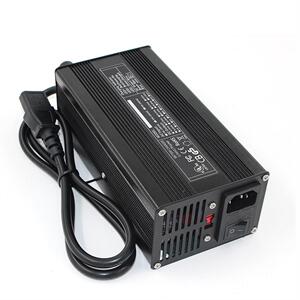
In AGV (Automated Guided Vehicle) systems, the Power Management Module (PMM) acts as the “neural command center,” monitoring battery health, controlling charging/discharging, and delivering stable power to controllers, sensors, and actuators. Its performance directly impacts AGV endurance, reliability, and lifecycle costs. This guide explores PMM selection for robust AGV energy architectures.


Core Functions of PMM

1.Intelligent Battery Monitoring

Real-Time Tracking: High-accuracy ADC circuits monitor voltage, current, temperature, and internal resistance.

SOC/SOH Calculation: ±3% precision for State of Charge (SOC) and State of Health (SOH).

Predictive Diagnostics: Alerts for aging/failure risks based on resistance changes and capacity decay.


2.Precision Charging Control

Multi-Stage Charging: CC-CV-float modes; ≤5ms switching between contact (100A+) and wireless (3-20kW) charging.

Dynamic Power Adjustment: Auto-scales current (e.g., 50% reduction in cold environments) to prevent lithium plating.


3.Efficient Power Distribution

Wide Input Range: 24V–72V input; ±1% stable outputs (48V motors, 24V controllers, 5V/3.3V sensors).

High Conversion Efficiency: >97% efficiency via ZVS topology, minimizing heat loss.


Selection Guide: Four Critical Dimensions

1.Power Density & Efficiency

AGV Type

Solution

Key Requirements

Light Indoor AGVs

Integrated PMIC

≥95% efficiency; <10×10mm

Heavy Forklift AGVs

Modular DC/DC regulators

≥30A output; ≥98% efficiency

Outdoor AGVs

Wide-temp modules

±20% input voltage tolerance

Avoid modules <92% efficiency: Every 3% drop reduces runtime by 7%

2.Environmental Resilience

Protection: IP54+ (dust/water resistance); ≥5Grms vibration resistance.

Certifications: UN38.3 + GB/T 31467 compliance; OVP/OCP/short-circuit protection.


3.Communication & Intelligence

Protocols: Native CAN/RS485 support for real-time SOC/fault data sync.

Predictive Maintenance: Battery Health Index (HI) calculation and runtime prediction.


4.Scalability & TCO

Modular Design: Parallel expansion for multi-battery setups; configurable power rails.

Lifecycle Cost: Solutions with >3,000 cycles reduce 3-year maintenance costs by 40% despite 15% higher upfront cost.


Powering Uninterrupted Logistics

Precise PMM selection ensures AGV energy efficiency. Whether compact PMICs for sorting robots or multi-rail regulators for heavy AGVs, scenario-aligned solutions maximize ROI.


Seeking High-Reliability PMM Solutions for AGVs?
We specialize in AGV power components:

Multi-Voltage Modules: 24V–72V input; 3.3V/5V/24V/48V outputs (98% efficiency).

Smart BMS: Health algorithms; CAN/RS485 protocol support.

Rugged Design: IP67 housing; -40°C to 85°C operation; EMC Class A certified.

Lifecycle Support: Design → echelon reuse.


Transform Your AGV with Intelligent Power Management!
Contact our team for tailored solutions.

Core Value:
Scenario-Optimized Design – PMM architectures tailored to load, environment, and scheduling.
Industrial Reliability – 100,000-hour MTBF; 50A peak current support.
Seamless Integration – Open BMS protocols/SDKs for PLC/navigation system integration.


AGV’s Energy Station: Automatic Charging System Selection and Application Guide

AGV’s Energy Station: Automatic Charging System Selection and Application Guide

In AGV (Automated Guided Vehicle) operations, automatic charging systems serve as “energy stations,” enabling 24/7 uninterrupted workflows. From contact-based charging contacts to wireless modules, technology selection directly impacts AGV endurance, reliability, and adaptability. This guide analyzes core solutions to help build intelligent energy management.


Core Functions: Enabling Seamless Operations

1.Maximize Uptime

Opportunity Charging: Top-up during brief stops.

Fast Charging: High-current replenishment between tasks.
→ Reduces manual charging downtime, boosting utilization by 25%.


2.Enhance Safety

Spark-free contacts (e.g., carbon brush design).

Fully sealed wireless modules.
→ Eliminates short-circuit risks in dust/moisture.


3.Lower TCO

Automation cuts labor costs.

Extends LiFePO4 battery life (2,000+ cycles).


Technology Comparison

1.Contact-Based Charging: Industrial Workhorse

Key Components:

Wear-resistant copper/UPE contacts (±2mm tolerance; 100,000+ cycles).

Smart chargers (0-60V/0-200A; 94% efficiency; CC/CV/float modes).

Best For: Heavy forklift AGVs (100A+ fast charging); fixed-route systems.

Limitations: Mechanical wear; condensation sensitivity.


2.Wireless Charging: Flexible Energy Manager

Core Tech:

Magnetic resonance coupling (85%+ efficiency; 5-15cm gap tolerance).

Auto-routing to charging pads at <20% battery.

Advantages: Zero contact wear; IP67 rating (oil/corrosion resistance).

Best For: Cleanrooms; multi-AGV warehouses; explosive environments.


Precision Selection Guide

1.Power & Efficiency

Heavy Forklifts (48V/400Ah)*: Contact-based (100A+) → 1.5hr full charge.

Light AMRs (24V/60Ah)*: Wireless (3-5kW) → 80% in 2hr.


2.Environmental Fit

Dust/moisture: IP67 wireless or sealed contacts.

Freezer (-30°C): BMS with temperature compensation.


3.Integration Complexity

Protocols: CAN/RS485 for SOC sync.

Scalability: Multi-charger cascading (e.g., 10-unit clusters).


4.TCO Optimization

High-frequency use (>3 charges/day): Wireless pays back in 2 years despite higher upfront cost.


Critical Avoidances:

Over-specification: Match charger output to battery C-rate.

Closed protocols: Reject proprietary systems to avoid ROS integration costs.


Powering Uninterrupted Logistics

Optimal charging system selection underpins AGV efficiency. Whether choosing millisecond contact charging for production lines or wireless for flexible warehouses, scenario alignment maximizes ROI.


Seeking Reliable, Compatible AGV Charging Solutions?
We deliver:

Full-Scenario Coverage: Contact-based (15-250A), wireless (3-20kW).

Smart Management: BMS protocol development (CAN/RS485); cluster scheduling.

Rugged Design: IP67, -30°C to 70°C, 5Grms vibration resistance.

Lifecycle Support: Design → maintenance optimization.


Power Your AGVs with Limitless Energy!
Contact us for tailored solutions.

Core Value:
Scenario-Driven Architecture – Charging systems optimized for load, duty cycle, environment.
Industrial Reliability – 100,000+ contact cycles; 100,000-hour MTBF wireless.
Seamless Integration – Native EtherCAT/PROFINET support.


AGV’s Power Heart: 24V LiFePO4 Battery Selection and High-Cycle Life Analysis

AGV’s Power Heart: 24V LiFePO4 Battery Selection and High-Cycle Life Analysis

In AGV (Automated Guided Vehicle) systems, lithium battery packs serve as the “power heart,” delivering sustained and stable energy. Among these, 24V LiFePO4 (LFP) batteries have emerged as the industrial AGV standard due to their safety, long cycle life, and environmental resilience. This guide explores their technical advantages and selection logic to help build efficient AGV power systems.


Why 24V LiFePO4 Dominates AGVs?

1.Safety: Non-Negotiable for Industry

Exceptional thermal stability (decomposition at 700°C vs. 200°C for ternary lithium), preventing thermal runaway during overcharge/short-circuit.

Chemically inert: Passes nail penetration and crush tests; no heavy metal pollution.


2.Cycle Life: TCO Optimization Driver

2,000+ cycles at 80% DoD (high-end cells: 3,000–5,000 cycles), doubling ternary lithium’s lifespan.

Minimal degradation: >80% capacity retention after 2,000 cycles.


3.Environmental Resilience

Wide temperature range: Operates at -20°C to 60°C (charge: 0°C–45°C).

Vibration-resistant: Reinforced casing (e.g., steel shell) withstands AGV shocks.


Precision Selection: Four Critical Dimensions

1.Voltage & Capacity

Voltage: 24V for light-duty AGVs; 48V/72V for heavy loads.

Capacity: Calculate based on power draw. Example: 800W load requires 24V 60Ah for ~1.8h runtime.


2.Discharge Performance

Continuous discharge: ≥1C (e.g., 100A for 100Ah battery).

Peak current: ≥3C for acceleration/climbing.


3.Communication & BMS

Protocols: CAN/RS485 for real-time SOC/temperature/fault data.

Protections: Multi-point monitoring, active balancing, overcurrent cutoff.


4.Certifications & Build

IP Rating: IP54–IP67 (prevents dust/liquid damage).

Certifications: UN38.3 + GB/T 31467 compliance.

Structure: Shock-absorbing metal housing.


Scenario-Based Solutions

Light Indoor AGVs: 24V 60Ah, IP54, CAN support (4–6h runtime @800W).

Outdoor Heavy AGVs: 48V 200Ah, IP67, wide-temperature BMS (-30°C), 2C fast charge.

High-Frequency AMRs: 24V 100Ah, 3,000+ cycles, active balancing.


Critical Avoidances:

Reject capacity-exaggerated cells: Demand 0.2C discharge curves + third-party test reports.

Never use “naked cells”: BMS-less packs accelerate degradation by 300%.


Powering Uninterrupted Logistics

Selecting the right 24V LiFePO4 battery is pivotal for AGV efficiency and TCO optimization. Whether for compact robots or smart factories, scenario-aligned solutions maximize ROI.

Seeking High-Safety, Long-Life AGV Batteries?
We specialize in AGV power solutions:

Custom Packs: 30–400Ah, CAN/RS485 support.

Industrial Design: IP67, wide-temp BMS (-30°C–70°C), UN38.3/CE certified.

Smart Management: SOC estimation, remote lock, OTA updates.

Lifecycle Support: From design to recycling.


Power Your AGVs with Confidence!
Contact our team for tailored solutions.

Core Value:
Scenario-Optimized Design – Cells/BMS tailored to load, runtime, environment.
Lifespan Guarantee – ≥80% capacity after 2,000 cycles; warranty support.
End-to-End Service – Mechanical integration, protocol development, echelon reuse.


AGV’s Neural Network: Comprehensive Guide to Communication Module Selection and Application

AGV’s Neural Network: Comprehensive Guide to Communication Module Selection and Application

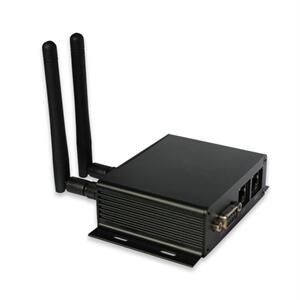
In the intelligent ecosystem of AGVs (Automated Guided Vehicles), communication modules act as the “vascular system,” enabling high-speed data exchange between vehicles, dispatch centers, and field equipment. The choice between wireless (Wi-Fi/5G/LoRa) and wired (Ethernet/RS-485) technologies directly determines system real-time performance, stability, and scalability. This guide explores AGV communication modules’ core value and selection logic to help build an efficient logistics network.


Core Mission: AGV’s “Data Lifeline”

1.Real-Time Task Scheduling

Receives commands (e.g., path planning, loading/unloading) with millisecond-level response for seamless operations.

Example: 5G ultra-low latency (<10ms) supports dynamic collision avoidance in 100+ AGV fleets.


2.Multi-Vehicle Coordination

V2V (Vehicle-to-Vehicle) communication exchanges real-time position/speed data for centimeter-level collision prevention.

Critical Scenario: LoRa self-organizing networks synchronize movement in narrow passages.


3.Predictive Maintenance

Continuously uploads motor temperature, battery health, and navigation accuracy for failure prediction.


Communication Technology Comparison

Wireless Solutions

Technology

Advantages

Limitations

Best For

Wi-Fi 6

High bandwidth (9.6Gbps)

Weak wall penetration

Indoor AMR fleets

5G Private

Ultra-low latency (1ms)

High deployment cost

Ports/Auto production

LoRa

Long range (2km), low power

Low speed (0.3–50kbps)

Campus/Agricultural AGVs

Tip: Prioritize 5GHz band + WPA3 encryption for Wi-Fi to avoid interference.

Wired Solutions

Technology

Advantages

Limitations

Best For

Gigabit Ethernet

High bandwidth (1Gbps)

Complex cabling

Charging station data links

EtherCAT

Microsecond synchronization

High master station cost

Precision assembly AGVs

RS-485

Strong noise immunity

Low speed (10Mbps max)

Small magnetic-guided AGVs


Selection Guidelines: Four Key Rules

1.Match Latency Requirements

μs control (e.g., servo sync): EtherCAT/PROFINET

ms response (collision avoidance): 5G/Wi-Fi 6

Second-level updates (status monitoring): LoRa/4G


2.Adapt to Environments


Environment

Solution

Critical Safeguards

High EMI workshops

Fiber Ethernet + shielding

EN 61000-6-2 certification

Multi-floor warehouses

Wi-Fi 6 + roaming optimization

≥1 AP per 500m²

Outdoor long-distance

5G+LoRa dual-mode

-40°C to +85°C modules


3.Plan Bandwidth Redundancy

Basic AGV data: 6KB/s (position + sensors)

High-load scenarios (3D avoidance): ≥50Mbps (e.g., 5G CPE)


4.Balance Security & Cost

Industrial encryption: MAC whitelisting + AES-128

TCO optimization: RS-485 + LoRa cuts costs by 40%


Advancing Smart Logistics

Precise communication module selection underpins AGV system efficiency. Whether deploying Wi-Fi 6 for indoor fleets or 5G+fiber for outdoor heavy-duty AGVs, scenario-aligned solutions unlock maximum potential.

Seeking robust, multi-protocol communication solutions for your AGVs?
We specialize in AGV core components, offering:


Full Protocol Coverage: Wi-Fi 6/5G CP/LoRa/EtherCAT modules


Industrial Durability: EMC Class A certified, IP67 rated, -40°C to +85°C operation


Custom Services:

Dual-network solutions (e.g., 5G+LoRa redundancy)

Protocol converters (RS-485 to PROFINET)

Antenna optimization & signal testing


Transform your AGV network with professional communication solutions!
Contact us for tailored designs and lifecycle technical support.

Core Value Propositions:
Scenario-Driven Architecture – Solutions scaled to AGV count, mobility range, and data volume
Industrial Reliability – 100,000-hour MTBF, IP67 dust/oil resistance

Seamless Integration – SDKs & tools for quick PLC/scheduler integration


The Intelligent Window of AGVs: A Comprehensive Guide to HMI Touchscreen Selection and Application

The Intelligent Window of AGVs: A Comprehensive Guide to HMI Touchscreen Selection and Application

In the intelligent system of AGVs (Automated Guided Vehicles), the HMI (Human-Machine Interface) touchscreen serves as the vehicle’s “neural command center,” handling core interaction tasks such as status monitoring, parameter configuration, task scheduling, and fault diagnosis. Its selection directly impacts operational efficiency, system reliability, and maintenance convenience. This article delves into the functional positioning and selection logic of AGV-dedicated HMI touchscreens, providing critical insights for your AGV upgrades.


Core Function of HMI Touchscreens: AGV’s “Interaction Hub”

Status Visualization & Monitoring

Operational Status Display: Real-time visualization of mission progress, navigation accuracy deviation, battery level, cargo sensor status, and other key parameters to eliminate blind operations.

Fault Diagnosis Interface: Rapid troubleshooting of navigation failures, communication loss, or actuator faults via alarm codes and graphical alerts (e.g., flashing red zones), minimizing downtime.


Dynamic Parameter Configuration

Supports on-site adjustments (route programming, speed tuning, safety obstacle distance settings) without a PC, significantly accelerating deployment.

Example: Directly modifying ultrasonic obstacle thresholds via touchscreen to adapt sensitivity under varying lighting.


Operational Control Gateway

Integrated touch controls (manual/auto mode switch, E-stop, task pause) replace physical buttons, simplifying vehicle design.


Key Technical Parameters: Critical Selection Dimensions

Size & Display Performance

Standard Sizes: 7~10.4 inches (balancing information density and space constraints).  

Resolution & Brightness: ≥800×480 resolution, ≥600 cd/m² brightness for sunlight readability.


Touch Technology & Reliability

Industrial Capacitive Screens: Glove/water-resistant operation (IP65/IP67), anti-smudge/scratch.

Physical Knobs + Buttons: Select models retain knobs for precise adjustments (e.g., fork height fine-tuning).


Environmental Resilience & Interface Expandability

Parameter

Industrial Requirement

Failure Risk

Temp. Range

-25°C to +70°C

Touch failure in low temps

Vibration Res.

≥5Grms (MIL-STD-810G)

Connector loosening → signal loss

Comm. Ports

Multi-CAN + RS485 + Ethernet

Compatibility with PLCs/schedulers

Software Ecosystem & Development Support

LVGL open-source GUI library support reduces UI customization costs.

SDK packages (driver source code, demos) accelerate secondary development.


Selection Guide: Matching AGV Application Scenarios

Optimal Solutions by Use Case:

1.Light-Duty AGVs (Cost-Oriented):

Configuration: 7″ embedded screen + basic CAN/RS485.

Scenario: Fixed-route transport, simple parameter tuning; prioritizes vibration/wide-temp tolerance.


2.Smart Warehouse AMRs (Dynamic Navigation):

Configuration: 10″ Android industrial panel + multi-Ethernet + Bluetooth/WiFi.

Scenario: Real-time SLAM mapping/multi-vehicle status display; OTA updates & voice alerts.


3.Heavy Forklift AGVs (Complex Interaction):

Configuration: Physical knobs + capacitive touch + metal housing.

Scenario: Frequent parameter adjustments (fork height/side-shift); high fault-diagnosis urgency.


Pitfall Avoidance:

Avoid consumer-grade screens: Products with MTBF <5,000 hours fail under industrial stress.

Reserve interface capacity: ≥20% spare ports for future expansions (e.g., 3D vision sensors).


 Advancing Smart Logistics: Upgrade Human-Machine Interaction

HMI touchscreen selection is pivotal for AGV operational efficiency and maintenance. Whether choosing cost-effective embedded screens for compact AGVs or multifunctional Android panels for complex tasks, precise alignment with interaction needs and environmental challenges maximizes AGV intelligence.


Seeking highly reliable, compatible HMI touchscreens for your AGV?
We specialize in AGV core components, offering full-range HMI solutions:

Multi-Size Industrial Panels: 7~12″ capacitive/resistive; IP65 + wide-temp operation; AGV-vibration certified.

Full Protocol Support: Native CANopen, EtherCAT, PROFINET, etc.

Custom Development: UI design, protocol integration, mechanical adaptation.

Lifecycle Support: Parameter tuning to fault diagnosis.


Empower your AGV with professional interaction!
Contact our technical team for customized solutions and rapid delivery.


Core Value Propositions:
Scenario-Optimized Matching: Solutions tailored to navigation type, task complexity, and EMI.
Industrial Reliability: 8,000-hour MTBF certification; -30°C~75°C operation.
Open Ecosystem: LVGL/Codesys support reduces integration costs.


The Neural Network of AGVs: A Comprehensive Guide to I/O Module Selection and Application

The Neural Network of AGVs: A Comprehensive Guide to I/O Module Selection and Application

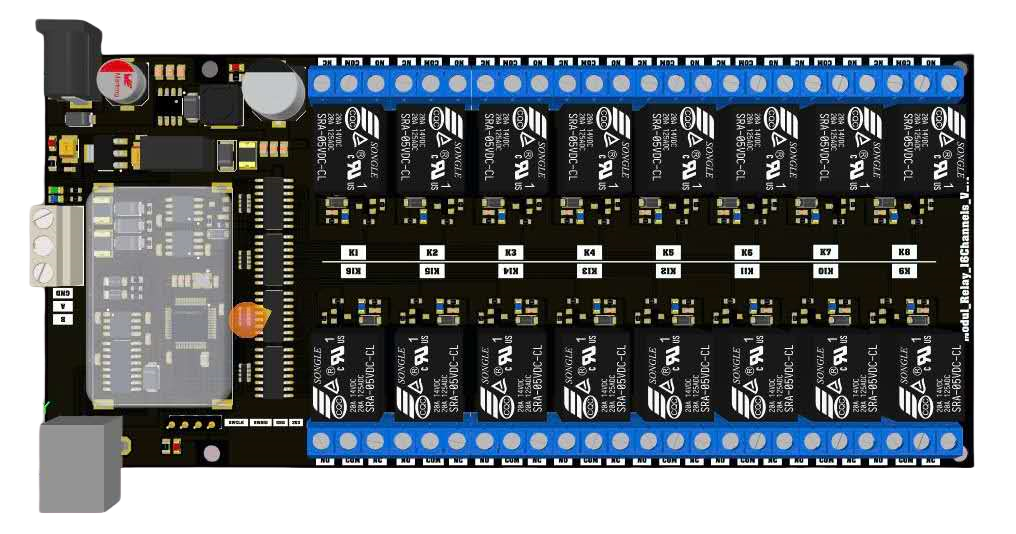
In the intelligent system of AGVs (Automated Guided Vehicles), I/O modules act as “neural hubs,” precisely connecting sensors (photoelectric switches, ultrasonic probes) and actuators (lifting flaps, indicator lights) to enable closed-loop control of environmental perception and action execution. Their selection directly determines the AGV’s response speed, stability, and expandability.


Core Function of I/O Modules: The “Signal Translator” for AGVs

Sensor Interface Layer:

Photoelectric Switches: Detect object presence/position via U-shaped slots (e.g., rack positioning, obstacle avoidance). Slot width, beam spacing, and response time (≤1ms) are critical for high-speed scenarios.

Ultrasonic Probes: Ideal for non-contact distance detection (e.g., low-height obstacle avoidance). Key selection factors include range (2cm–10m), blind zone, and anti-interference capability (IP67 + EMC certification).


Actuator Drive Layer:

Lifting Flaps: Rely on Digital Outputs (DO) to control solenoid valves, requiring interfaces supporting instantaneous high current (e.g., 500mA/channel).

Indicator Lights/Alarms: Must match PNP/NPN output types, compatible with PLC input characteristics.


Case Study: An automotive factory AGV experienced delayed lifting flap actions due to I/O module response lag. After switching to a high-refresh-rate module, efficiency increased by 23%.


Key Technology: The Revolutionary Advantage of IO-Link

IO-Link technology (IEC 61131-9 standard) is becoming the mainstream choice for AGVs, offering:

Simplified Wiring: Uses unshielded 3-core standard cables, replacing complex multi-wire harnesses and reducing installation costs by 30%.

Smart Diagnostics: Real-time uploads of events like sensor contamination or actuator shorts; supports dynamic parameter adjustment (e.g., photoelectric switch thresholds).

Flexible Expansion: A single master supports 4–8 devices, compatible with photoelectric, ultrasonic, and other sensor protocols.


Precision Selection Guide: Matching AGV Scenario Needs

1.Interface Compatibility

Input Types:

Prioritize NPN/Push-Pull outputs for photoelectric switches to avoid PLC level conflicts.

Ultrasonic probes require analog inputs (4–20mA) or IO-Link digital interfaces.


Output Drive:

Lifting flaps need sink outputs (max. 2A); indicator lights can use source outputs.


2.Expandability

Large AGV fleets require modular I/O design with CAN bus cascading. Reserve 20% spare capacity for DI/DO channels.

Example: Base + expansion modules enable 50 DI / 51 DO channels, meeting multi-laser safety redundancy needs.


3.Environmental Resilience

Parameter

Industrial Requirement

Failure Risk

Protection

IP67 (dustproof/short immersion)

Short circuits in humid environments[6]

Temp. Range

-25°C to +70°C

Response lag in low temps[8]

EMI Immunity

EN 61000-6-2 certified

False triggers from inverters[6]


Avoiding Selection Pitfalls: Critical Engineer Knowledge


Blind Zones & Response Time:
Ultrasonic blind zones >5cm may miss low obstacles; photoelectric response time >⅓ of line cycle creates detection bottlenecks.

Power Compatibility:
24V sensors connected to 220V systems require fiber-optic isolation modules, otherwise burnout rates exceed 90%.


IO-Link Versioning:
V1.1 masters support V1.0 devices, but data backup requires device-level compatibility.


Advancing Smart Logistics: Upgrade from Core Components

I/O module selection is the cornerstone of AGV stability and intelligence. Whether it’s an embedded IO-Link master for compact AGVs or high-density remote I/O modules for complex scenarios, precise matching of sensor characteristics and actuator loads unlocks the AGV’s full potential.

Seeking highly compatible, robust I/O modules and sensor/actuator components for your AGV project?
We specialize in AGV core components, offering a full range of I/O solutions:

Photoelectric/Ultrasonic Sensors: Slot-type, through-beam, background suppression models for complex scenarios.

Actuator Drive Modules: Millisecond-level response for lifting flaps, indicators, and alarms.

IO-Link Masters: 500mA/channel drive, compatible with mainstream bus protocols.

Custom Expansion: Configurable DI/DO/AI channels; CAN/Ethernet cascading solutions.


Let professional I/O solutions become your AGV’s “smart nerves”!
Contact our technical team for customized selection advice and one-stop component supply.


Key Value Propositions:
Scenario-Based Selection: Solutions tailored to navigation (magnetic/SLAM), payload, and EMI.
Full Protocol Coverage: IO-Link, PROFINET, EtherCAT, and more.

Lifecycle Support: Parameter optimization to fault diagnosis.


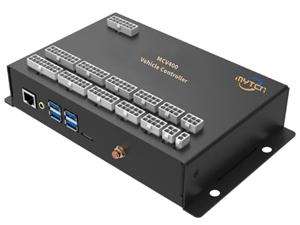
The Brain of AGVs: A Main Controller Selection Guide – Unlocking the Key to Efficient Navigation and Intelligent Scheduling

The Brain of AGVs: A Main Controller Selection Guide – Unlocking the Key to Efficient Navigation and Intelligent Scheduling

In the wave of automated logistics, AGVs (Automated Guided Vehicles) have become indispensable “carriers” in modern smart factories. The core driving these smart vehicles to move precisely and execute tasks efficiently is their “brain” – the main controller. Faced with mainstream choices like PLCs, Industrial PCs (IPCs), and Embedded Systems (e.g., MCU + RTOS), how do you select the most suitable “commander” for your AGV? This article delves into their capabilities for handling navigation algorithms and task scheduling to empower your precise selection.


The Core Mission of AGV Main Controllers: Navigation & Scheduling


The core intelligence of AGVs lies in two key capabilities:

1.Precise Navigation:
Real-time processing of sensor data (laser, vision, magnetic tape, etc.) using algorithms like SLAM (Simultaneous Localization and Mapping), path tracking, and obstacle avoidance to ensure safe, accurate arrival at target locations in complex environments.

2.Efficient Task Scheduling:
Receiving task instructions from upper-layer systems (e.g., WMS/MES) or internal sources, combined with vehicle position, status, and traffic rules, to perform optimal path planning, task sequencing, and multi-vehicle coordination – maximizing overall operational efficiency.


The performance and architecture of the main controller directly determine the ceiling of these capabilities.


In-Depth Analysis of Main Controller Solutions

1.PLC: The Stable, Reliable “Veteran” for Structured Environments

Advantages:
Industrial-grade stability and reliability are its hallmark, with strong interference resistance, ideal for factory workshops. Programming complies with IEC standards (Ladder Logic, ST, etc.), ensuring rigorous logic control and mature development/debugging. High integration with industrial fieldbuses (e.g., EtherCAT, Profinet).

Navigation & Scheduling Handling:
Excels at fixed-route navigation (e.g., magnetic tape, QR codes) and relatively simple scheduling rules. Limited processing power for computation-intensive algorithms like real-time SLAM or dynamic path planning in complex environments.

Typical Scenarios:
Fixed routes, clear task logic, relatively stable environments (e.g., production line loading/unloading, fixed-route warehouse transport).


2.Industrial PC (IPC): The “Powerhouse” for Complex Environments & Intelligent Decision-Making

Advantages:
Provides powerful general-purpose computing (x86 architecture) and rich expansion interfaces (USB, PCIe, Ethernet, etc.). Runs full operating systems (e.g., Windows/Linux), supporting complex algorithm libraries (e.g., ROS) and high-level languages (C++/Python). Large memory capacity handles massive map and task data.

Navigation & Scheduling Handling:
The ideal platform for complex navigation (Laser/Vision SLAM, dynamic obstacle avoidance) and advanced scheduling (multi-vehicle coordination, real-time dynamic path re-planning). Handles computation-intensive algorithms smoothly, adapting to highly dynamic environments.

Typical Scenarios:
Natural navigation (no fixed markers), highly dynamic environments, large-scale multi-vehicle coordination, complex task scheduling (e.g., smart logistics centers, large flexible production lines).


3.Embedded System: The “Agile Specialist” for Lightweight, Flexible & Cost-Optimized Solutions

Advantages:
Based on ARM/MIPS microcontrollers (MCU/MPU) combined with a Real-Time Operating System (RTOS). Features small size, low power consumption, and optimized cost. Offers extremely strong determinism and guaranteed low latency. Highly customizable.

Navigation & Scheduling Handling:
Excels at executing high-determinism, moderate-computation navigation tasks (e.g., precise predefined path tracking, fixed-beacon localization) and lightweight scheduling logic. Resource-constrained for extremely complex SLAM or large-scale optimization scheduling.

Typical Scenarios:
Small AGVs/AMRs, cleaning robots, applications sensitive to cost/size/power consumption, or with relatively fixed routes/tasks.


Precise Selection: Matching the Optimal “Brain” for Your AGV


There is no one-size-fits-all solution. Selection requires comprehensive consideration:

Application Scenario Complexity: Is the environment highly dynamic? Is SLAM required for navigation? How many vehicles and how complex are the scheduling rules?

Real-Time Performance & Computational Load: How critical is real-time response for navigation? Does task scheduling require heavy online computation/optimization?

Environmental Adaptability: Level of vibration, temperature, EMI? Required reliability grade?

Cost & Development Timeline: Budget constraints? Team’s familiarity with the tech stack? Time-to-market pressure?

Expandability & Maintenance: Need future upgrades? Maintenance convenience requirements?


Selection Reference:

Pursuing ultimate stability, fixed routes, clear logic → PLC is the foundational choice.

Tackling complex environments, intelligent navigation, large-scale scheduling → IPC delivers robust computing power.

Focusing on cost control, lightweight agility, real-time response → Embedded Systems demonstrate efficiency.


Towards Smart Logistics, Starting from the Core Components

As the “intelligent core” of AGVs, the main controller’s selection profoundly impacts vehicle performance, efficiency, and cost. Understanding the differences between PLCs, IPCs, and Embedded Systems in executing navigation algorithms and task scheduling is crucial for building efficient, reliable AGV solutions.


Seeking a high-performance, stable, and reliable main controller (and core components) for your AGV project?
We specialize in AGV core components, offering a full range of solutions covering PLCs, industrial-grade IPC motherboards/systems, and high-performance embedded system modules. Based on your specific application, performance needs, and budget, we provide professional selection advice and customized support.


Let a professional “brain” drive your AGVs efficiently!
Contact us anytime. Our technical team will provide tailored AGV core component selection solutions and one-stop supply services.


Key Value Propositions:

Design Expertise: We understand the strengths/weaknesses of different controllers in AGV applications.

Comprehensive Component Supply: Offering core components like mainstream PLCs, high-performance IPCs, and stable embedded modules.

Technical Support: Assisting customers with precise selection and integration based on specific requirements.


AGV’s Intelligent Nerve Center: Motor Drive Selection Guide

AGV’s Intelligent Nerve Center: Motor Drive Selection Guide

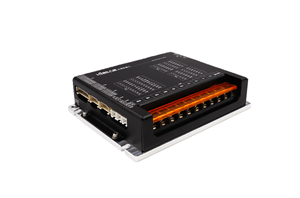
In AGV (Automated Guided Vehicle) motion control systems, motor drives act as the vehicle’s “neural hub,” precisely regulating motor start/stop, speed adjustment, and steering. They translate navigation commands into power output, directly determining AGV’s motion smoothness, response speed, and energy efficiency. Poor selection risks motor overheating, positioning drift, or system failure—this guide reveals core selection principles for building a reliable AGV drive chain.


Motor Drives: Precision Commanders of AGV Motion

Combining power electronics and real-time algorithms, motor drives deliver three core functions:


Precise Start/Stop Control: Soft-start eliminates mechanical shock; smooth stop prevents cargo shift.

Stepless Speed Management: 0.1% speed resolution ensures seamless slope/turn transitions.

Steering Angle Calibration: Closed-loop steering control with <0.5° heading error.


Technology Selection: Matching Motor Types

1.Brushless DC (BLDC) Drives

Compatible Motors: 24V/48V BLDC motors.

Advantages: Cost-effective, PWM speed control simplicity, regenerative braking support.

Applications: Light-load warehouse AGVs, low-speed transport robots.


2.AC Servo Drives

Compatible Motors: AC servo motors.

Advantages: Ultra-fine position control, 300% instant overload capacity, EtherCAT real-time communication.

Critical Applications: Heavy-load precision docking, high-speed S-curve obstacle avoidance, LiDAR SLAM-guided AGVs.


Five Golden Rules for Scientific Selection

Rule 1: Power Matching – The Iron Law

Rated Current ≥ Motor Rated Current × 1.2
Example: 750W servo motor (6A) → Drive must support ≥7.2A continuous output.

Peak Current ≥ Motor Starting Current × 1.5 (handles slopes/sudden load changes).


Rule 2: Control Precision Defines Performance

Basic Path Tracking AGVs: ±5% speed accuracy + open-loop steering.

High-Precision AGVs:

Mandatory: 17-bit encoder feedback + full-closed-loop position control.

Protocols: EtherCAT/CANopen (command response <2 ms).


Rule 3: Environmental Resilience

IP Rating:

Clean indoor: IP54 (dust/water splash resistance).

Outdoor/humid workshops: IP67 (withstands pressure washing).


Temperature Tolerance:

Cold storage: Operates at -25°C.

Welding shops: Stable at 80°C.


Rule 4: Energy Optimization

Regenerative Braking: Recovers braking energy → 8–15% longer battery life.

Smart Standby: Auto low-power mode when idle → 20% energy reduction.


Rule 5: Safety Mechanisms

Triple Protection (overcurrent/voltage/temperature): Triggers <100 ms emergency cutoff.

Self-Diagnostics: Real-time error codes (e.g., encoder disconnect, motor stall).


Real Costs of Selection Errors

Case 1: Underpowered Drive Halts Production

Scenario: 1.5-ton AGV in auto assembly line.

Error: 20A drive for 35A peak servo motor.

Result: Hourly overload shutdowns.

Solution: Upgraded to 50A peak servo drive.


Case 2: Communication Delay Causes Collision

Scenario: Medical supply delivery AGV.

Error: RS485 drive (50 ms latency).

Result: Delayed obstacle response → wall impact.

Solution: Switched to EtherCAT drive (<1 ms response).


Case 3: Inadequate Protection Corrodes Circuitry

Scenario: AGV in seafood processing plant.

Error: IP54 drive in high-humidity zone.

Result: Salt corrosion → biweekly repairs.

Solution: IP67 sealed drive + protective conformal coating.


AGV’s Stabilizing Foundation: Castor Wheel/Idler Wheel Selection Guide

AGV’s Stabilizing Foundation: Castor Wheel/Idler Wheel Selection Guide

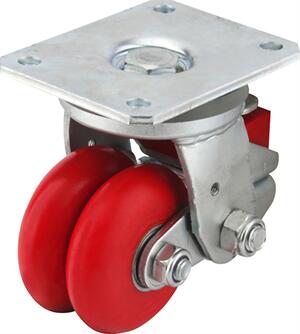
In AGV (Automated Guided Vehicle) mobility systems, castor/idler wheels act as the vehicle’s “silent legs.” Though non-driven, they are critical for stable movement—supporting chassis weight, absorbing ground shocks, and ensuring drive wheel traction. Poor selection causes body sway, abnormal wear, or wheel slippage. Scientific selection is key to building highly reliable AGV chassis.


Castor Wheels: Silent Guardians of Stability

Designed for 360° steering via horizontal rotation and ball bearings, castor wheels fulfill three core functions:

Load Distribution & Anti-Tip: Prevent drive wheel lift-off under heavy loads.

Shock Absorption: Dampen vibrations from rail seams or uneven surfaces.

Dynamic Correction: Assist steer drives in real-time path tracking.


Polyurethane Wheels: The Industrial AGV Standard

Polyurethane outperforms alternatives with:

Exceptional Wear Resistance (20,000+ hours service life).

Oil/Chemical Resistance (withstands grease/solvents).

Quiet Operation (<65 dB noise).
Nylon wheels shed debris; rubber wheels crack prematurely.


Four Core Dimensions for Scientific Selection

1.Load Capacity: The Safety Baseline

Per-Wheel Load = (AGV Weight + Max Payload) × Safety Factor (1.2–1.5) ÷ Number of Wheels
Example: 1-ton AGV + 500kg payload with 4 wheels → Min. 487.5kg/wheel.

Impact Margin: Add 20% capacity for frequent start-stop cycles.


2.Wheel Diameter & Tread Width: Scenario Adaptation

Smooth Floors (Warehouses/Electronics):
Ø75–100mm narrow wheels (30–40mm width) minimize rolling resistance.

Rough Terrain (Construction/Foundries):
Ø125–150mm wide-tread wheels (50–60mm width) enhance obstacle clearance.

Cold Storage (–30°C):
Ø100mm+ wide-tread wheels maximize grip via larger contact area.


3.Bearing Structure: Determines Steering Lifespan

Double-Row Ball Bearings:
40% higher load capacity, superior lateral impact resistance—essential for heavy AGVs.

Single-Row Ball Bearings:
Lower steering resistance—suits light, high-speed AGVs.


4.Extreme Environment Solutions

Food/Pharma: FDA-compliant blue polyurethane wheels + stainless steel cores.

High-Temperature Workshops: Flame-retardant polyurethane (120°C-rated) + metal dust covers.

ESD-Sensitive Areas: Conductive wheels (surface resistance: 10^6–10^9 Ω).


Real Costs of Selection Errors

Case 1: Undersized Wheels Cause Drive Slippage

Fault: 1.2-ton AGV in auto plant used Ø80mm narrow wheels—oil slicks caused drive wheel lift-off.

Solution: Upgraded to Ø125mm wide-tread wheels → zero failures.


Case 2: Bearing Seal Failure Halts Production

Fault: AGV in ceramic plant failed 5×/month—dust ingress into unsealed bearings.

Solution: Triple labyrinth-sealed bearings → 3× lifespan extension.


Case 3: Cold-Induced Cracking Paralyzes Logistics

Fault: Standard polyurethane wheels brittle fractured at –25°C.

Solution: Switched to –40°C cold-resistant formula → stable operation.


AGV’s Power Heart: Motor Selection Guide and Core Technology Analysis

AGV’s Power Heart: Motor Selection Guide and Core Technology Analysis

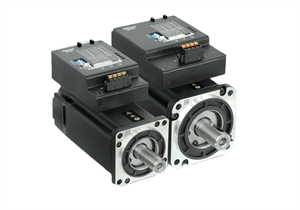
In the precision drive systems of AGVs (Automated Guided Vehicles), motors act as their “power heart,” directly determining power output, energy efficiency, and motion accuracy. Faced with diverse load, speed, and scenario requirements, how to scientifically select DC or AC servo motors? This guide reveals key selection principles to build efficient and reliable AGV drive systems.


AGV Motor Technologies: DC vs. AC Servo

1.DC Motors: Cost-Effective & Reliable

Typical Voltage: 24V/48V (standard industrial safety voltage)
Core Advantages:

Cost Efficiency: 30–50% lower upfront cost than servo motors; simpler maintenance.

Rapid Start-Stop Response: High starting torque suits frequent acceleration/deceleration (e.g., warehouse sorting).

Easy Speed Control: Smooth speed adjustment via PWM (pulse-width modulation).
Ideal Applications:


Light-load AGVs (<500 kg payload).


Low-speed scenarios (≤1.5 m/s).


Fixed-path transport with moderate precision requirements.


2.AC Servo Motors: Masters of Precision Motion

Operating Logic: Closed-loop control (encoder feedback for real-time position/speed).
Performance Edge:

Millimeter-Level Accuracy: Repeatable positioning error <±0.1 mm (requires high-resolution encoders).

Extreme Dynamic Response: 300% overload capacity; instant acceleration/deceleration response.

Superior Energy Efficiency: 15–25% more efficient than DC motors (especially in variable-speed operation).


Critical Applications:

Heavy-load AGVs (>1-ton payload).

High-speed precision docking (≥2 m/s; ±5 mm stopping accuracy).

Complex path control (e.g., S-curve obstacle avoidance, diagonal travel).


Scientific Selection: Four-Dimensional Methodology

Dimension 1: Load Characteristics Dictate Motor Type

Light Loads (<300 kg): 150–400W 24V brushless DC motors. Servo motors optional but less cost-effective.

Medium Loads (300–800 kg): 400W–1kW 48V brushless DC or 750W servo motors (redundant design recommended).

Heavy Loads (>1 ton): Servo motors mandatory (≥1.5 kW). DC motors risk overheating.


Dimension 2: Motion Precision Requirements

Basic Path Tracking (magnetic/QR navigation): DC motor + encoder (±10 mm accuracy).

High-Precision Tasks (robotic arm docking, machine loading): Servo motors essential (±0.5 mm accuracy).


Dimension 3: Environmental Adaptability

IP Rating:

Dusty/humid workshops: IP65-rated motors (dust/water jet resistance).

Food/pharma industries: Stainless steel housing + food-grade grease.


Temperature Extremes:

Cold storage: Motors supporting cold-start at -25°C.

High-temperature workshops: Insulation materials rated for 80°C.


Dimension 4: Balancing Efficiency & Cost

DC Motors: Lower upfront cost, moderate energy efficiency, easier maintenance.

AC Servo Motors: Higher initial investment, superior energy savings (long-term), requires professional tuning.


Selection Pitfalls: Three Critical Mistakes

Case 1: Mismatched Power

Error: 800 kg AGV using a 500W DC motor.

Result: Persistent overload triggers thermal shutdown, reducing efficiency by 50%.

Solution: 1.2 kW servo motor with 300% instantaneous overload margin.


Case 2: Precision Misjudgment

Error: Using DC motors for ±2 mm docking in auto assembly lines.

Result: Accumulated deviation causes robotic arm collision.

Solution: Servo system with 17-bit absolute encoder.


Case 3: Inadequate Protection

Error: IP54 motor in a food factory AGV.

Result: Moisture ingress causes weekly short-circuit failures.

Solution: IP67 stainless steel sealed motor.